Shut Off the Water
If the damaged line has an accessible shutoff, close it when safe. If the source cannot be isolated, the home's main water shutoff may need to be used.
Burst pipe water damage in New Orleans can spread from one plumbing failure into flooring, drywall, ceilings, wall cavities and adjoining rooms. After the water supply is safely stopped, the next priority is finding where the water traveled. Then, standing water and moisture retained inside building materials must be addressed.
The immediate objective is to stop additional water without creating a safety problem. A burst or failed pipe can continue releasing water until the appropriate supply is shut off.
If the damaged line has an accessible shutoff, close it when safe. If the source cannot be isolated, the home's main water shutoff may need to be used.
Do not stand in water while touching outlets, electrical panels, appliances or electrical equipment. Water near electrical systems requires caution.
Move unaffected belongings away from spreading water when safe. However, never enter an electrically hazardous or unstable area to save belongings.
Photograph the visible source, standing water, wet floors, ceiling stains, drywall, cabinets and affected contents. Do this before cleanup changes the scene.
Fixing the broken pipe controls the plumbing source. It does not automatically remove the water already inside the property or dry wet building materials.
A plumber may repair the failed pipe, connection, fitting or valve. Water-damage restoration addresses the resulting standing water, affected materials and retained moisture.
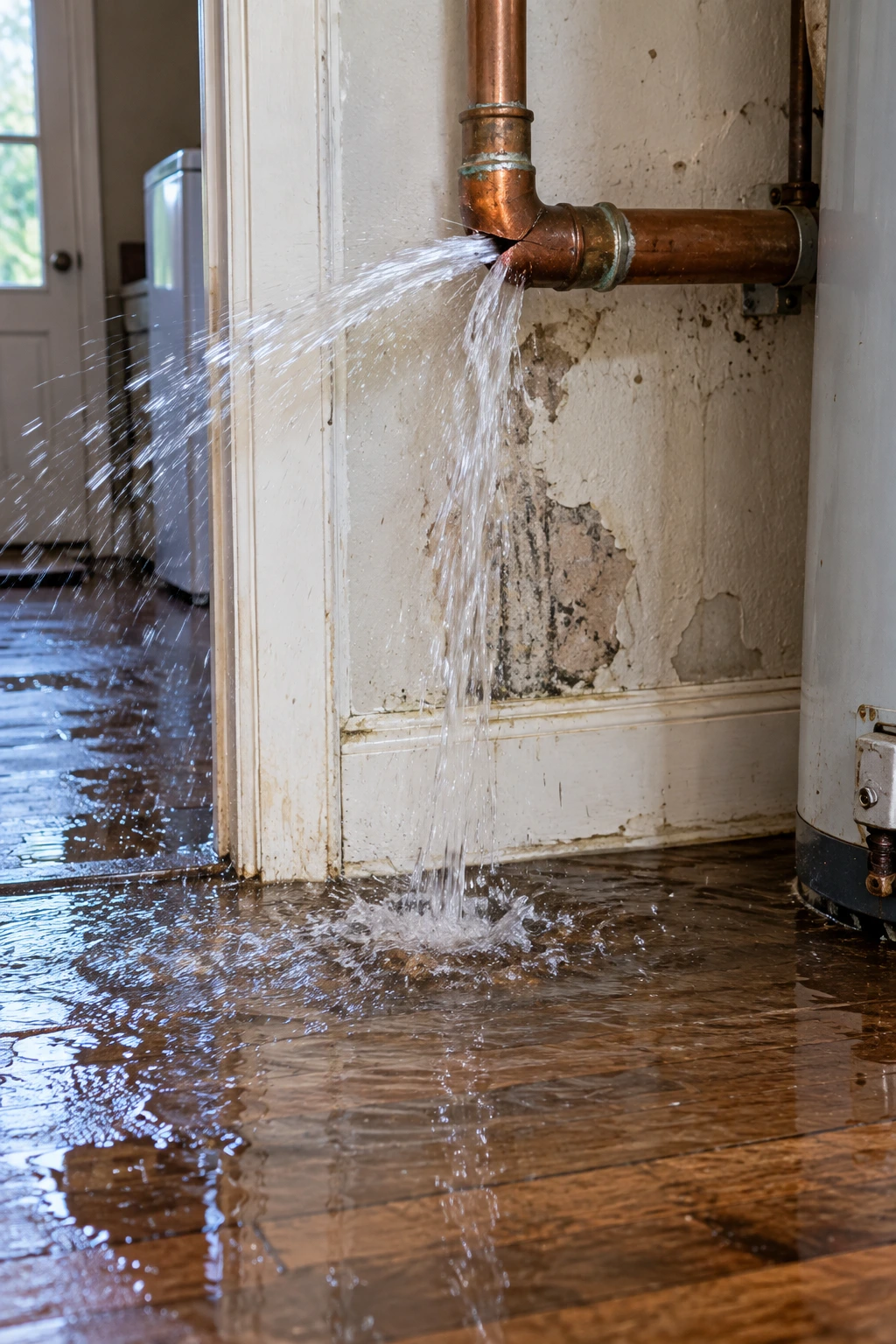
Water follows gravity, openings, seams and connected materials. The visible puddle may be only one part of the affected area. This is especially important when a pipe fails inside a wall, ceiling or upper floor.
A pipe inside a wall can wet drywall, insulation, framing, trim and nearby flooring before the full damage appears.
Plumbing failures above a ceiling can affect insulation and framing. Damage may develop before water drips into the room.
Standing water can move beneath wood, laminate, vinyl, tile and other finished flooring materials.
Water can reach plywood, OSB and other subfloor materials through seams and perimeter gaps.
Water can travel beneath cabinet bases and toe kicks. Surface drying may not reach these spaces.
An upper-floor plumbing failure can affect ceilings, walls, flooring and contents below.
The exact work depends on how much water was released, where the pipe failed and which materials became wet. Therefore, the process should follow the actual water path, not just the first puddle.
Isolate the failed pipe or appropriate water supply. This prevents additional water from entering the structure.
An appropriate plumbing professional addresses the damaged pipe, fitting, valve or related component.
Evaluate visible damage and possible hidden moisture in floors, walls, ceilings, cabinets and adjoining areas.
Address pooled or excess water where extraction is appropriate.
Materials that can remain may need controlled airflow, dehumidification, access and moisture monitoring.
New flooring, drywall and trim should not conceal unresolved moisture conditions.
Describe where the pipe failed, whether the water has stopped and whether standing water remains. Also, mention which rooms and materials appear wet. Provider availability can then be checked.
Extraction and structural drying address different parts of a burst-pipe loss. Removing visible water does not automatically remove moisture inside flooring, drywall, framing or other building materials.
Extraction focuses on removable standing or excess water. It is especially relevant when a pipe failure creates pooled water across accessible floors.
Water extraction in New Orleans →Structural drying addresses moisture that remains inside suitable building materials after removable water has been taken away.
Structural drying in New Orleans →A burst pipe does not automatically mean every wet material must be removed. Material type, physical condition, water exposure, saturation and access all affect the decision. Drying potential matters as well.
| Material | What Should Be Evaluated? |
|---|---|
| Drywall | Saturation, physical condition, finish, insulation behind the wall and access to concealed areas. |
| Insulation | Insulation type, saturation, condition, location and whether it interferes with adjacent drying. |
| Hardwood Flooring | Moisture beneath boards, cupping, movement, finish condition, subfloor moisture and drying potential. |
| Laminate / Composite Flooring | Swelling, edge damage, moisture beneath the installation and physical changes to the core. |
| Cabinets | Cabinet material, swelling, moisture behind the unit, toe-kick exposure and wet flooring underneath. |
| Structural Wood | Moisture condition, physical damage, access and whether the wood can remain during drying. |
Restoration should not end simply because surfaces look dry. Evaluate the affected area before new flooring, drywall, trim or paint conceals the materials again.
The failed pipe, fitting, valve or other source is no longer allowing water into the structure.
Removable excess water has been addressed. It should not simply evaporate into nearby materials.
Floors, subfloors, walls, cabinets, ceilings and adjoining areas along the water path have been evaluated.
Surface appearance alone should not determine whether building materials are ready to be enclosed.
The ANSI/IICRC S500 Standard for Professional Water Damage Restoration addresses inspection, drying, materials and documentation.
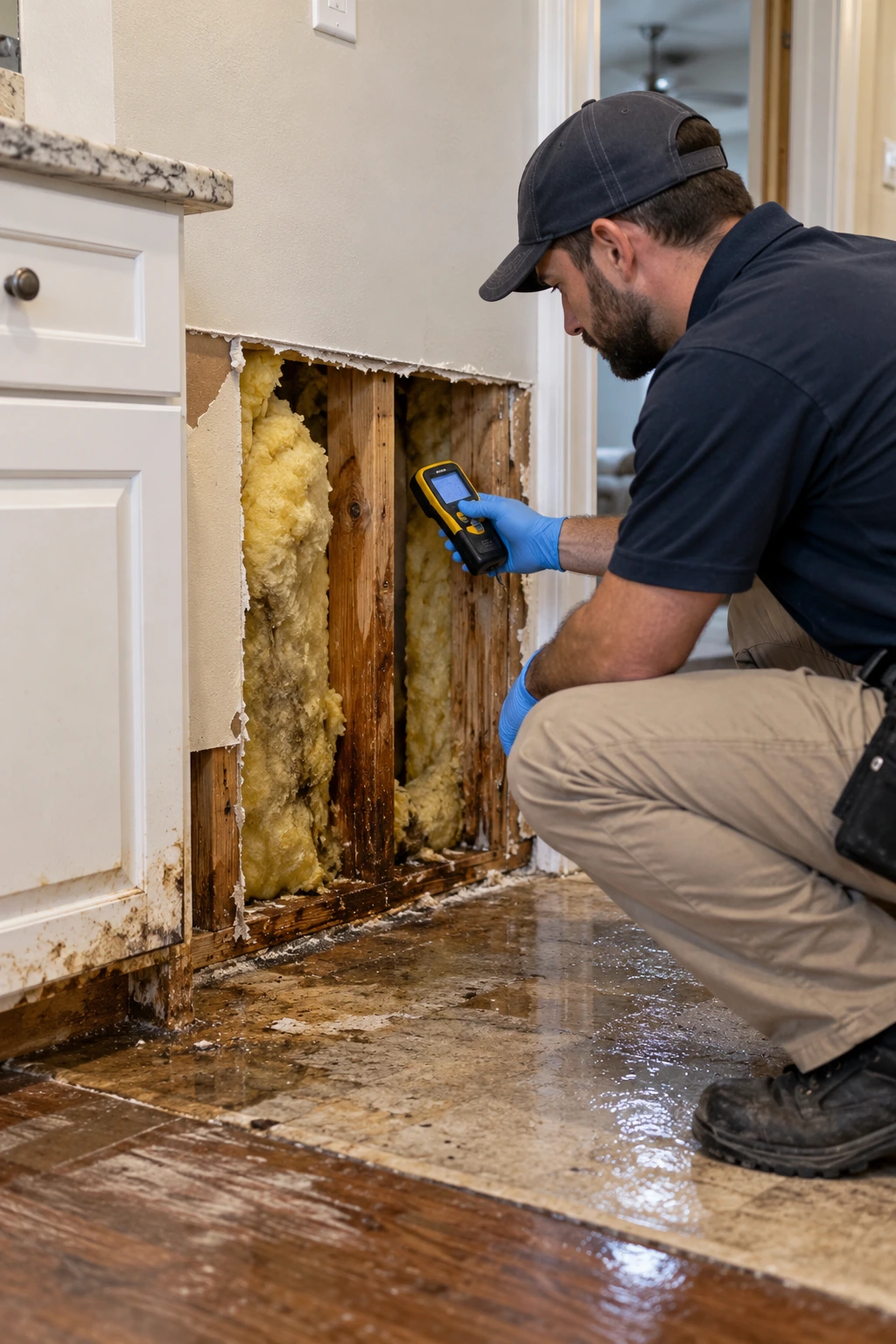
Wet drywall, insulation, cabinets, flooring and wall cavities can create conditions that support mold growth when moisture remains.
Correcting the plumbing failure is therefore only one part of the problem. Wet materials should also be evaluated and appropriately dried.
Learn more about mold remediation in New Orleans .
The EPA also provides homeowner guidance in its guide to mold and moisture .
Burst pipes are often associated with colder climates. However, freezing conditions can still affect exposed plumbing in New Orleans. Pipes in exterior or unconditioned spaces may be more vulnerable during freezes.
Knowing how to shut off your home's water supply before an emergency can reduce the amount of water released after a plumbing failure.
Exposed pipes, exterior plumbing and pipes in less-protected areas deserve attention when freezing conditions are forecast.
The Sewerage & Water Board of New Orleans provides local information for water customers, including freeze-preparation guidance.
The size of the broken pipe does not determine the full restoration scope. The water volume, failure location, duration and affected materials can matter more.
A line that releases water for a longer period can affect a larger area.
A failure inside a wall, ceiling or upper floor can cause concealed damage.
Water can cross thresholds, move beneath flooring and enter adjoining spaces.
Different flooring systems raise different questions about moisture underneath.
Fixed components can conceal water behind or beneath visible surfaces.
Concealed materials may require additional access before proper evaluation or drying can proceed.
A property can look very different after water removal and material access. Therefore, basic records help preserve what was visible at each stage of the loss.
When safe, photograph the visible pipe, fitting, valve or location of the failure.
Record wet flooring, drywall, ceilings, cabinets and contents before cleanup changes them.
Keep relevant information describing the failed component and the repair.
Retain written descriptions of extraction, access, drying and monitoring work.
Document hidden damage found after walls, floors or cabinets are opened.
Keep final photos, relevant invoices and moisture records when supplied.
A burst pipe describes the source. The next service depends on standing water, retained moisture and any conditions that developed after the plumbing failure.
For removable standing or excess water after a plumbing line releases water.
Water extraction in New Orleans →For moisture retained in drywall, flooring, subfloors, walls and framing.
Structural drying in New Orleans →For visible or suspected mold linked to previously wet building materials.
Mold remediation in New Orleans →For exterior floodwater entering a property, rather than an indoor plumbing supply failure.
Flood cleanup in New Orleans →When wastewater or sewage is involved, contamination changes cleanup considerations.
Sewage backup cleanup →For broader information about residential water damage in New Orleans.
Water damage restoration in New Orleans →Ask what failed, what was repaired and whether water can still enter from the same plumbing problem.
Ask whether the evaluation covered adjoining rooms, flooring layers, ceilings, walls and concealed spaces.
Ask which areas still have removable water and which materials need structural drying.
Ask why particular materials can be dried. Also, ask why others need access or removal.
Ask how moisture conditions will be evaluated before walls or floors are closed.
Clarify whether plumbing repair, reconstruction or flooring replacement belongs in the proposed scope.
Stop the water supply if safe. Avoid electrical hazards and keep people away from unsafe areas. Also, document visible damage before cleanup changes the scene.
You may need both. A plumber fixes the failed plumbing component. A water-damage provider addresses standing water, wet materials and moisture.
No. Stopping the source prevents additional water. However, flooring, drywall, ceilings and wall cavities may remain wet.
No. Extraction is mainly relevant when removable excess water remains. If materials are wet without pooling, drying may be more important.
Yes. Water can move through wall cavities, plumbing openings, flooring layers and adjoining rooms.
Not automatically. The decision depends on physical condition, saturation, exposure, access and drying potential.
Yes. Wet building materials may support mold growth when moisture remains. Address both the pipe and affected materials.
Yes. Freezing conditions can affect vulnerable and exposed plumbing. The Sewerage & Water Board provides local preparation guidance.
Call (866) 203-7057 . Describe the plumbing failure, affected areas and current water conditions.
If a burst or failed pipe has released water into your home, call to describe where the plumbing failure occurred. Explain whether the water supply has been stopped and whether standing water remains. Also, mention which floors, walls, ceilings or other materials appear affected.
This website helps homeowners connect with independent local service providers. It does not perform plumbing repairs or restoration work directly. Service availability depends on the request type, location and provider capacity. Homeowners should verify applicable licensing, insurance, qualifications and the proposed scope before hiring.