1. Protect Yourself
Avoid touching wet plugs, outlets, switches, or appliance wiring. Never stand in water to disconnect electrical equipment.
Appliance leak water damage in New Orleans can occur when a dishwasher, washing machine, refrigerator, or water heater leaks into nearby flooring, cabinets, or walls. Cleanup may involve stopping the water, removing excess water, assessing hidden moisture, and drying affected building materials. Appliance repair and property restoration are often separate jobs.
A leaking appliance can release water quickly or spread moisture slowly over several days. First, keep people away from wet electrical equipment. Then, stop the water supply if you can reach the control safely.
Avoid touching wet plugs, outlets, switches, or appliance wiring. Never stand in water to disconnect electrical equipment.
If accessible without electrical risk, close the appliance's water-supply valve. Otherwise, seek appropriate professional help.
Check the surrounding floor, cabinets, adjoining rooms, and nearby walls for visible water or damage.
When safe, photograph the leak, wet materials, damaged belongings, and the surrounding area before cleanup changes their appearance.
Leaks can begin inside an appliance, at a supply connection, or along a drain hose. However, the amount of visible water does not always reveal the extent of damage below the surface.
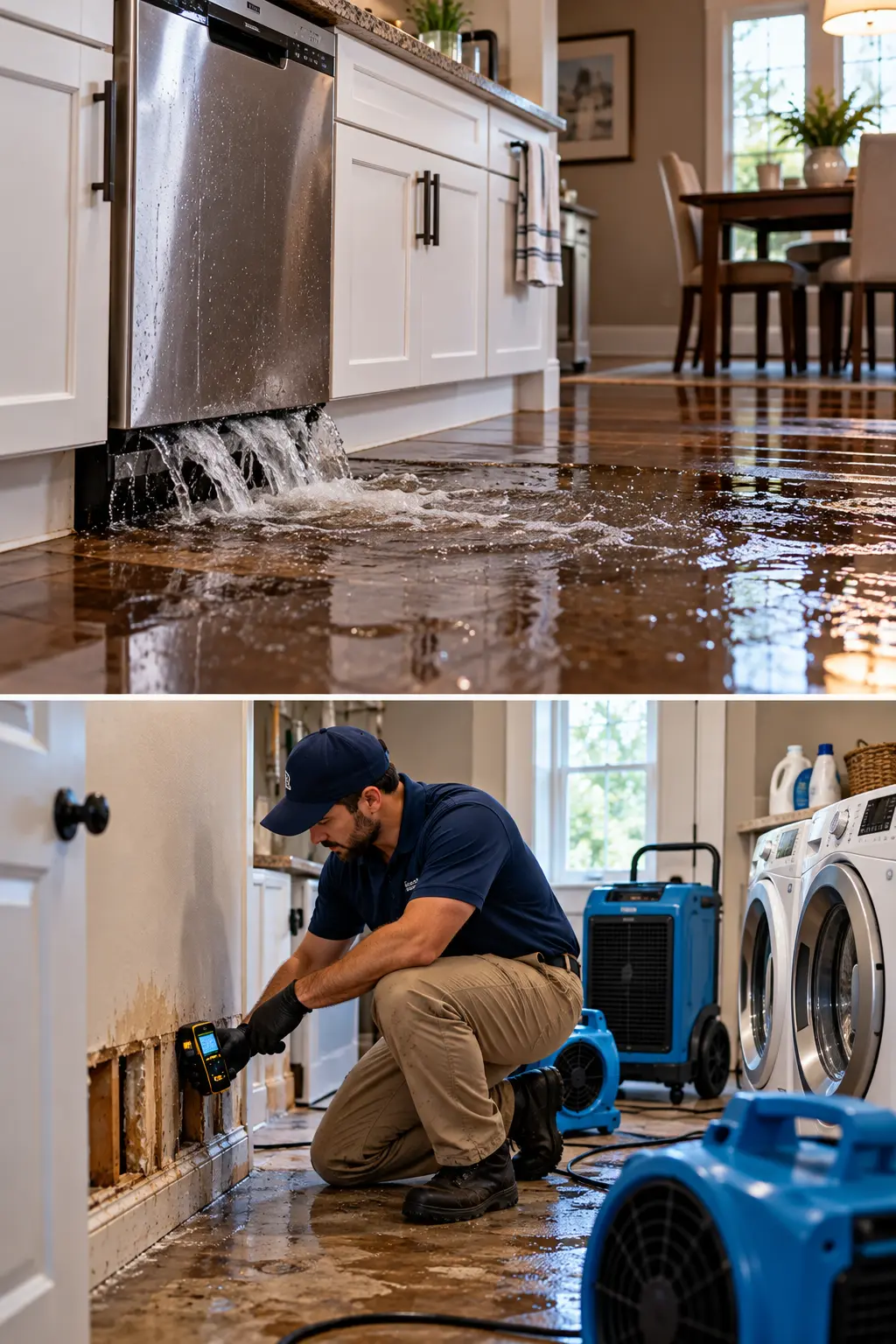
A dishwasher may leak from a hose, connection, seal, or drainage problem. Water can spread beneath cabinets and across kitchen flooring.
Supply hoses, drain connections, and appliance components can fail. As a result, laundry-room flooring and nearby walls may become wet.
Refrigerator water lines and ice-maker connections can leak behind or underneath the unit. Slow leaks may remain unnoticed until the floor changes appearance.
A water heater may leak from a connection, valve, or tank. Depending on its location, water can affect floors, walls, storage areas, and nearby belongings.
Kitchen appliance leaks are often discovered after water reaches the visible floor. However, moisture may have already moved beneath the dishwasher, cabinet toe kicks, flooring, or nearby baseboards.
For example, a failed dishwasher supply connection may release water behind cabinetry. Meanwhile, the finished kitchen floor may conceal damp underlayment or subfloor materials.
Because of this, a restoration assessment should consider the moisture pathway rather than only the exposed puddle.
An appliance technician or plumber may repair the failed component. However, that repair does not necessarily dry flooring, cabinets, or walls already affected by water.
This work focuses on the source of the leak, such as a damaged hose, valve, pump, connection, or appliance component.
Restoration focuses on the affected property materials after water has escaped from the appliance.
Water often follows gaps, seams, and low points. Consequently, damage can extend beyond the room where the appliance sits.
Water can collect behind toe kicks or beneath cabinet bases.
Moisture may enter floor seams, underlayment, or subfloor layers.
Leaking connections can wet drywall, insulation, and nearby framing.
Hidden supply-line leaks may affect walls and flooring behind the appliance.
Water may spread beneath thresholds or through continuous flooring.
In multilevel properties, leaks can travel downward through floor assemblies.
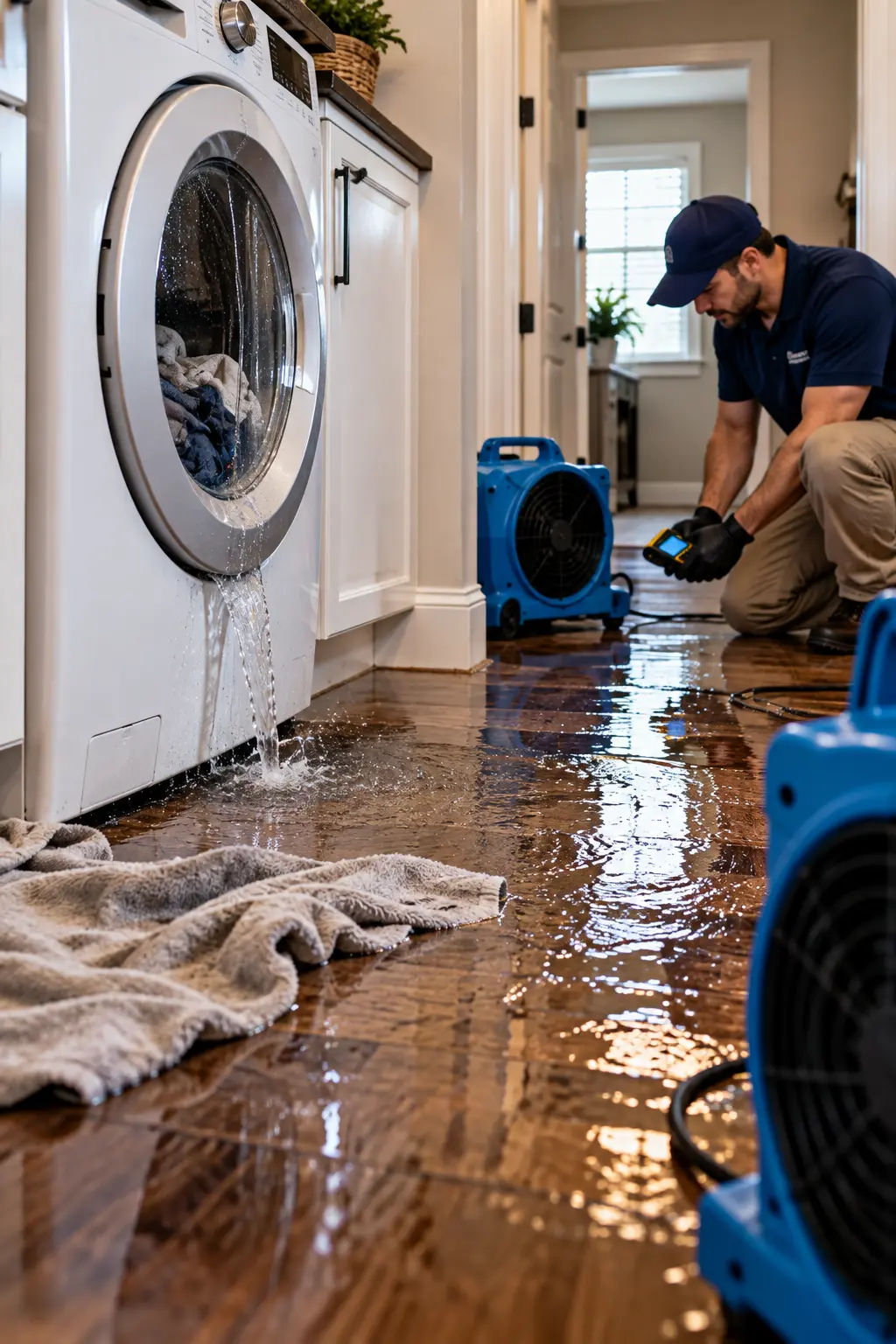
Washing machine hoses and drain connections can release water behind or beneath the unit. In some cases, the leak may continue until someone notices the water or shuts off its supply.
Once water spreads, it may reach adjoining rooms, baseboards, or concealed floor layers. Therefore, the visible laundry room puddle may not define the complete affected area.
After the source is controlled, the next step is to evaluate which building materials are still wet. Appropriate drying equipment may be used when conditions support that approach.
Appliance leak water damage in New Orleans may require several steps, depending on the water source and affected materials. The process begins with safety and leak control. Then, the provider evaluates water spread and determines what restoration work is appropriate.
Determine whether the leak came from the appliance, a supply connection, or a drain component.
Stop additional water safely. The repair may require an appliance technician or plumber.
Review wet floors, cabinets, walls, nearby rooms, and suspected hidden areas.
When appropriate, extraction equipment removes accessible standing or pooled water.
The provider assesses moisture in suitable flooring, walls, and other materials.
Reconstruction decisions follow the condition of the affected materials and remaining moisture.
Describe the appliance, the affected rooms, and whether water is still present. Call to check independent local-provider availability.
The appliance involved does not automatically determine the condition of the released water. For instance, a leaking supply hose differs from wastewater escaping through a drain.
A failed pressurized supply hose may initially release water from the domestic plumbing system.
However, surrounding materials, exposure time, and other conditions still affect restoration decisions.
Water escaping from a drain or appliance discharge line may contain residues or contaminants.
Consequently, the provider should assess the source before choosing cleaning and drying methods.
Extraction removes accessible excess water, while structural drying addresses retained moisture inside suitable building materials. Some appliance leaks require both. Others may need only a limited response.
If water has pooled across kitchen or laundry-room flooring, extraction may be an early cleanup step.
Water extraction in New Orleans →If water remains beneath flooring or inside drywall, suitable materials may need further assessment and drying.
Structural drying in New Orleans →The restoration scope depends on the type of material, water exposure, contamination, physical condition, and access for appropriate drying.
| Material | Potential Concern | What to Ask |
|---|---|---|
| Hardwood flooring | Moisture beneath boards, swelling, cupping, or movement | Was the subfloor evaluated? |
| Laminate flooring | Swelling and moisture within layered materials | Can the affected material be appropriately dried? |
| Tile flooring | Moisture within or below the floor assembly | Were underlying layers checked? |
| Drywall | Wet paper facing, concealed moisture, or material deterioration | Is removal or drying appropriate? |
| Cabinet bases | Swelling, water retention, and concealed damage | Were toe kicks and hidden spaces assessed? |
| Insulation | Retained water, contamination, and limited drying access | Can the affected material remain safely? |
The EPA recommends prompt attention to wet building materials to help reduce mold risk.
Not every appliance failure creates an obvious flood. A refrigerator line may drip behind the unit, or a dishwasher connection may release small amounts of water during repeated cycles.
Over time, these leaks can affect nearby cabinets and flooring. For that reason, unexplained staining, swelling, or damp odors deserve attention, even when no active puddle is visible.
Doors, toe kicks, or cabinet panels may change shape after repeated moisture exposure.
Moisture beneath an appliance may create visible changes in adjoining flooring.
Damp or musty odors may indicate retained moisture or another condition requiring evaluation.
Yes. When moisture remains trapped behind cabinets, beneath flooring, or inside drywall, the conditions may support mold growth. Therefore, stopping the leak is only part of resolving the problem.
If damp building materials are the primary concern, moisture evaluation and structural drying may be appropriate.
Learn about structural drying →Visible growth, persistent damp odors, and prolonged moisture exposure may call for a mold-specific assessment.
Learn about mold remediation →Read the EPA's homeowner guide to mold and moisture .
Different water sources can affect the same building materials. However, identifying the source helps determine which service best matches the homeowner's situation.
| Service | Main Water Source | Primary Concern |
|---|---|---|
| Appliance Leak Damage | Dishwasher, washing machine, refrigerator, or water heater | Appliance-related water affecting interior materials |
| Burst Pipe Water Damage | Failed plumbing pipe | Water released from damaged building plumbing |
| Flood Cleanup | Outdoor flooding | Floodwater, debris, and contamination concerns |
| Sewage Backup Cleanup | Wastewater backing up through drains or sewer connections | Contaminated water and affected materials |
Replacing a dishwasher, washing machine, or refrigerator does not automatically resolve moisture beneath the appliance. Before rebuilding, confirm that the underlying conditions were appropriately addressed.
The failed appliance or connection is no longer releasing water.
Accessible standing water has been removed where needed.
Cabinet cavities, floor layers, and nearby walls received appropriate evaluation.
The provider has identified which materials can remain and which require removal.
Remaining affected materials were assessed beyond visible surface appearance.
The homeowner understands the appliance repair, restoration, and reconstruction scopes.
The cost depends on the amount of water released, leak duration, affected materials, contamination, and work required. Consequently, a small visible puddle does not always mean a small restoration scope.
A slow leak may affect concealed areas over time.
Water spreading beyond the appliance location can expand the work.
Different materials respond differently to water exposure.
Swollen or wet cabinet materials may require additional attention.
Damp subfloors and wall cavities may affect drying requirements.
Replacing damaged finishes is separate from removing water and drying materials.
Photos and written records can help homeowners track what happened before repairs begin. They may also help distinguish appliance repairs from water-damage restoration.
Record the appliance and visible leaking connection when safe.
Photograph wet floors, cabinets, walls, and nearby belongings.
Keep records showing how the appliance or connection was fixed.
Retain estimates, findings, invoices, and available completion records.
Appliance leaks can require different restoration steps. Explore the service that matches the current problem.
For accessible standing water that must be removed from affected areas.
Water extraction in New Orleans →For retained moisture in suitable building materials after water removal.
Structural drying in New Orleans →For water released from failed pipes elsewhere in the home's plumbing system.
Burst pipe water damage →For visible or suspected mold associated with unresolved moisture conditions.
Mold remediation in New Orleans →For contaminated wastewater backing up through drainage systems.
Sewage backup cleanup →Read about broader residential water damage restoration in the city.
Water damage restoration →Appliance leaks do not depend on the age of the property alone. A newer dishwasher can leak, while an older washing-machine connection may fail over time. In either case, the surrounding floor and wall construction influences the resulting damage.
Some homes contain layered flooring, enclosed cavities, and previous alterations. These features may make it harder to see where leaked water traveled.
New cabinets and finished flooring can conceal older connections or moisture beneath appliances. Therefore, visible finishes should not be the only area considered.
Ask whether appliance or plumbing repairs are still required.
Clarify whether the water came from a supply line or a drain system.
Ask about nearby cabinets, subfloors, baseboards, and wall cavities.
Request an explanation of cleaning, drying, removal, and replacement decisions.
Ask how the provider assessed remaining affected materials.
Confirm whether appliance replacement, plumbing repairs, or reconstruction are outside the restoration scope.
Keep away from wet electrical components. Then, stop the water supply if you can do so safely. Check for water beneath cabinets and flooring, and arrange appropriate repairs and cleanup.
Yes. Water can spread beneath thresholds and continuous flooring. It may also affect adjacent walls or lower-level materials.
Yes. A small leak behind a refrigerator can affect flooring, baseboards, and wall materials before anyone notices a puddle.
Not always. However, if water reached vulnerable building materials, additional assessment or drying may be needed.
It can be. Moisture may remain in underlayment or subfloor layers even when the finished surface appears dry.
Yes. Mold may develop when moisture remains trapped in suitable materials. Source repair and moisture control are important.
Coverage depends on the policy and circumstances. Ask your insurer about sudden failures, gradual leaks, exclusions, and documentation.
Call (866) 203-7057 to describe the appliance, affected rooms, and type of water damage. Availability depends on local provider capacity.
Dealing with a leaking dishwasher, washing machine, refrigerator, or water heater? Describe the apparent source and which materials became wet. Call to check availability with independent local service providers.
This website is a free service that helps homeowners connect with independent local service providers. We do not perform restoration work directly. Availability depends on ZIP code, request type, and provider capacity. Homeowners should verify licensing, insurance, qualifications, and the proposed scope before hiring.