Ceiling or Wall Stains
Yellow-brown marks, bubbling paint, soft drywall, or a sagging area can indicate water has traveled from a roof, plumbing line, or room above. The visible stain may be smaller than the moisture behind the surface.
When water damages a New Orleans home, the first priorities are controlling the source, limiting the spread, and finding out which materials are still wet. Our water damage restoration New Orleans LA service connection helps homeowners explore appropriate local restoration options for residential water damage.
Water inside a home can spread well beyond the place where it first becomes visible. A plumbing failure may begin under a sink but reach cabinetry and flooring. Water entering through a roof can appear as a small ceiling stain while moisture continues into drywall or a wall cavity. Surface water may also move beneath finished flooring and reach the subfloor.
Effective water damage restoration begins with understanding where the water came from, how far it traveled, and which materials remain wet. Some situations mainly involve visible water. Others involve hidden moisture, damaged building materials, contamination, or conditions that may contribute to mold growth.
The appropriate response depends on the water source, how long the materials have been wet, whether contamination is involved, and how deeply moisture has moved into the home.
Want to understand potential cleanup and repair expenses? Our water damage restoration cost guide for New Orleans explains published pricing benchmarks, what an estimate may include, and questions homeowners can ask before comparing restoration quotes.
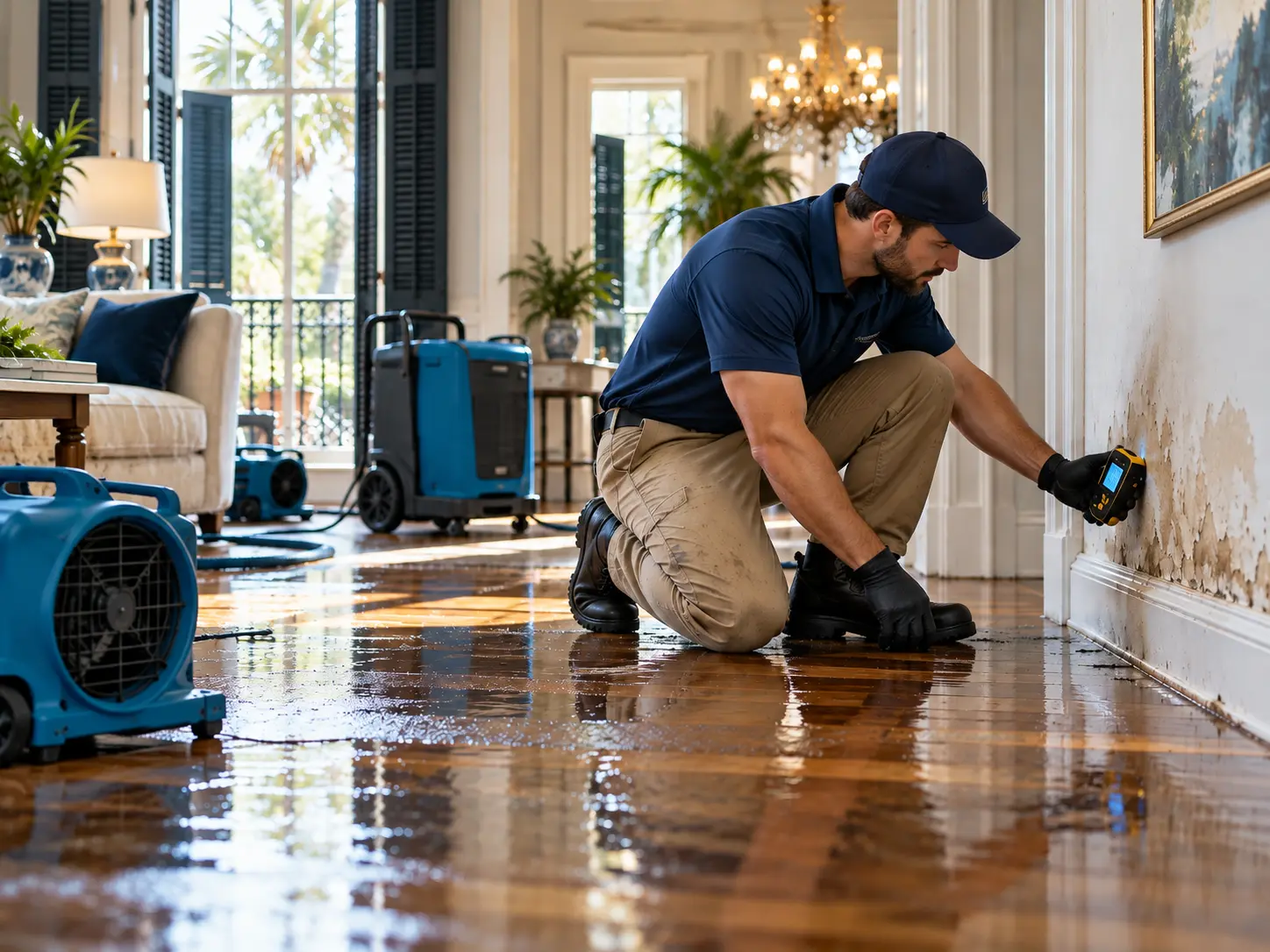
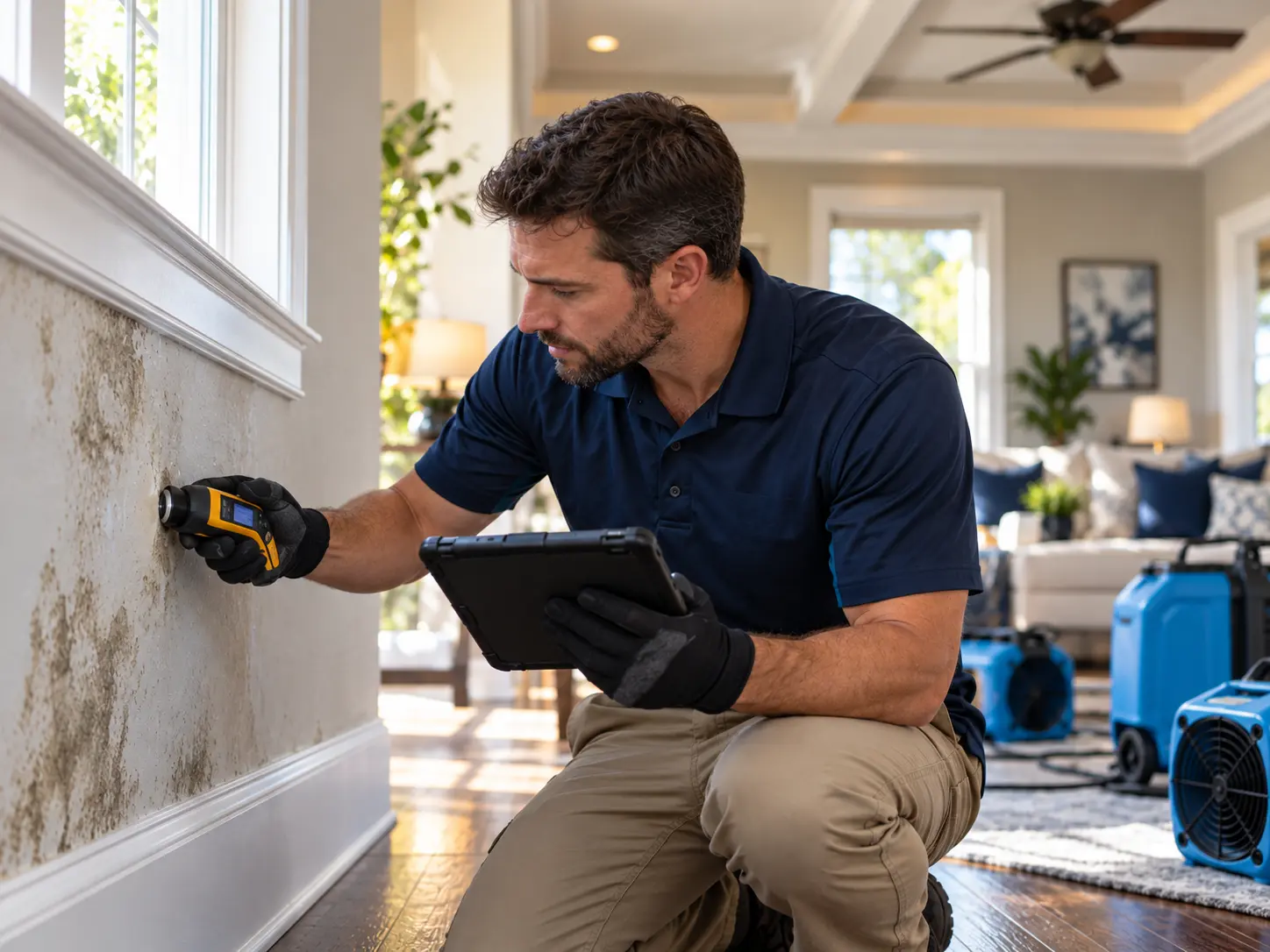
This is especially relevant when moisture reaches wall cavities, subfloors, ceilings, multiple rooms, or materials that cannot be completely dried using normal household methods.
Safety comes first. If water is still entering the home, stop or isolate the source only when it can be done safely. Stay away from electrical equipment in wet areas, document visible damage, and keep unaffected belongings away from the water.
CDC guidance recommends cleaning, drying, or removing wet items within 24–48 hours when possible to help reduce mold growth. CDC water-damage guidance . EPA guidance also emphasizes correcting the moisture source as the key to mold control. EPA moisture and mold guidance .
Some residential water damage is obvious, such as standing water after a leak. Other problems develop quietly inside walls, below flooring, or around ceilings and cabinets. Changes in materials, recurring dampness, or unexplained stains can indicate that moisture is still present.
Yellow-brown marks, bubbling paint, soft drywall, or a sagging area can indicate water has traveled from a roof, plumbing line, or room above. The visible stain may be smaller than the moisture behind the surface.
Cupping, lifting, discoloration, loose flooring, or a damp feel underfoot may indicate moisture has reached the flooring system or subfloor. Surface drying alone may not address moisture below.
A damp or musty odor that remains after a leak can point to hidden moisture or mold after water damage. The moisture source should be identified and corrected before cosmetic repairs are made.
Repeated damp walls, damp flooring, or moisture around a window, ceiling, cabinet, or plumbing fixture suggests that the source may still be active or the area may not have dried completely.
| What you notice | What may be happening | Useful next step |
|---|---|---|
| Standing water | Active leak, overflow, flooding, or water intrusion | Control the source when safe and determine whether water removal is needed. |
| Wet drywall or wall staining | Moisture may be inside a wall cavity or coming from above | Identify the source and determine how far the affected material extends. |
| Wet flooring or subfloor moisture | Water may have moved beneath the visible floor surface | Drying should account for the surface material and the layers below. |
| Musty odor or visible growth | Persistent moisture may have created mold-related conditions | Correct the moisture source and determine whether remediation may be appropriate. |
Describe what happened, where the water is showing, and whether the affected area is still wet. Provider availability can then be checked for your New Orleans location and the type of residential water damage involved.
The exact scope depends on the source, affected materials, amount of water, and how long the area has been wet. A typical response begins by understanding the source, controlling excess water, drying affected materials, and addressing remaining damage or mold-related conditions.
Determine where the water came from, whether it is still active, and which rooms or materials have been affected.
Standing water or heavily saturated areas may need attention before effective drying of surrounding materials can continue.
Moisture checks help determine whether walls, flooring, trim, cabinets, subfloors, and other materials are actually drying.
Damaged materials, contamination, or mold-related conditions may require additional cleanup, removal, repair planning, or remediation.
The homepage covers the overall restoration need. The individual service pages below explain each response in more detail, helping homeowners find information that matches the source and condition of the damage.
For standing water or excess indoor water that needs to be removed before drying surrounding materials can continue.
Water extraction services →For visible or suspected mold after water damage, especially where materials have remained wet or persistent damp conditions are present.
Mold remediation services →For hidden moisture inside wet building materials, wall cavities, flooring, subfloors, trim, cabinets, and structural components.
Structural drying services →For sewage backup water or other contaminated water events that need a different cleanup approach from an ordinary clean-water leak.
Sewage backup cleanup →For indoor flooding, significant water intrusion, or storm-related flooding that leaves rooms and building materials saturated.
Flood cleanup services →For water released by a burst pipe or failed plumbing line that affects drywall, flooring, cabinetry, or nearby rooms.
Burst pipe water-damage cleanup →For water intrusion associated with heavy rain, storm conditions, or exterior openings that allow water into the home.
Storm water-damage services →For leaks involving washing machines, dishwashers, refrigerator supply lines, water heaters, or similar household appliances.
Appliance leak water-damage services →For roof leaks associated with ceiling water stains, wall staining, wet drywall, and hidden moisture below the roofline.
Roof leak water-damage services →This site focuses on New Orleans city service areas. Provider availability can vary by ZIP code, the type of residential water damage, current capacity, and provider participation.
Residents can also find official flood-preparedness and recovery information through NOLA Ready , the City of New Orleans emergency-preparedness resource.
Water damage restoration can include identifying the source, controlling standing water, drying wet building materials, monitoring hidden moisture, cleaning affected areas, and addressing remaining damage. The exact services depend on the source and materials involved.
Yes. Moisture can remain inside wall cavities, behind cabinets, beneath flooring, or in the subfloor even when the surface appears dry. The structural drying service explains this type of moisture problem in more detail.
CDC guidance recommends cleaning, drying, or removing wet items within 24–48 hours when possible to help reduce mold growth. Safety, contamination, material type, and the water source can affect the appropriate cleanup approach.
Sewage backup water may contain contaminants and should not be handled like an ordinary clean-water leak. Avoid unnecessary contact and review the sewage backup cleanup service for information specific to this type of water event.
Confirm that the provider serves your New Orleans location and handles the type of residential damage involved. Ask about licensing and insurance where required, how affected areas will be evaluated, and how the scope of work will be determined before authorizing service.
No. Standing water, a slow roof leak, a burst pipe, an appliance leak, contaminated backup water, and storm-related flooding can require different responses. The source, amount of water, affected materials, and time since the event all matter.
If you are a homeowner dealing with standing water, water intrusion, wet building materials, hidden moisture, or another residential water damage problem, call to discuss the situation and check service availability for your New Orleans location.