Watch for Electrical Hazards
Keep away from wet outlets, appliances, electrical panels, and exposed wiring. Never walk through standing water to reach electrical controls.
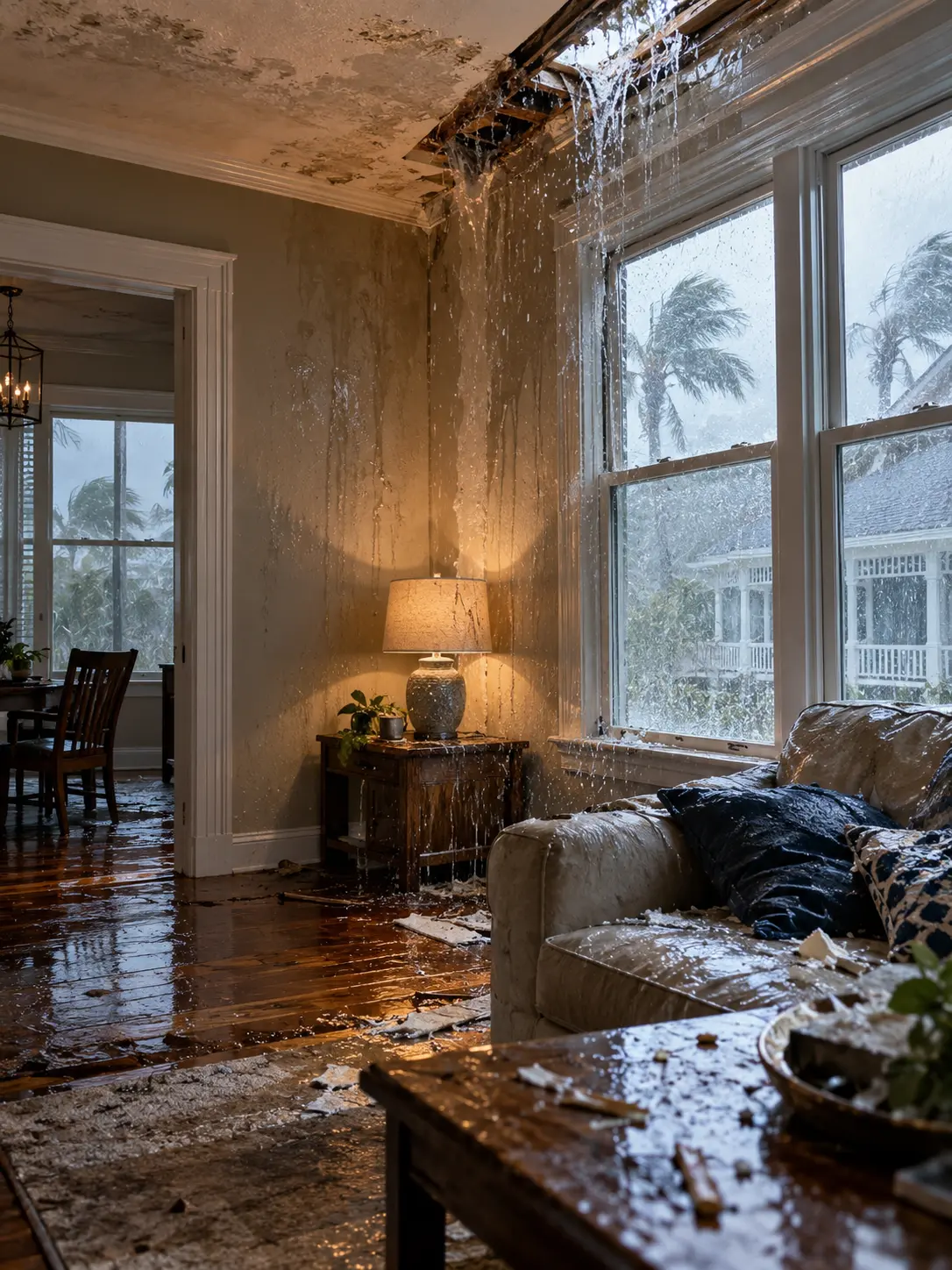
Storm water damage in New Orleans can occur when wind-driven rain enters through damaged roofing, windows, doors, or exterior walls. Restoration may involve finding the entry point, removing interior water, evaluating wet materials, and drying the structure. However, exterior repairs may require a different contractor before interior restoration can remain effective.
Storm damage can create hazards beyond wet flooring or stained drywall. For example, damaged electrical systems, sagging ceilings, broken glass, fallen branches, and unstable building materials may make parts of a home unsafe.
Keep away from wet outlets, appliances, electrical panels, and exposed wiring. Never walk through standing water to reach electrical controls.
Sagging ceilings, damaged roof sections, fallen limbs, and visibly unstable materials require caution. Do not stand beneath damaged overhead areas.
Rain entering directly through a roof is different from floodwater that traveled across streets or drainage areas. Consequently, cleanup precautions may differ.
If conditions allow, photograph visible entry points, water stains, damaged materials, and affected rooms before cleanup changes their appearance.
For local preparedness and emergency information, review NOLA Ready. For flooded-home precautions, see CDC safety guidance.
Storm water damage in New Orleans often involves both a weather-created opening and moisture inside the home. Although these problems are connected, fixing the opening and restoring affected interior materials may require separate work.
Identifying the source helps distinguish storm restoration from flood cleanup, sewage cleanup, and other water-damage services.
Wind-driven rain may enter from above, through the building's sides, or near floor level. Furthermore, one storm can create several moisture pathways at the same property.
| Entry Point | Possible Affected Materials | Question to Ask |
|---|---|---|
| Damaged roof | Attic, insulation, ceilings, walls, floors | Has further weather entry been controlled? |
| Window or door | Framing, trim, drywall, wall cavities, flooring | Did water reach behind nearby finishes? |
| Ground-level water | Flooring, baseboards, lower drywall, cabinets | Does the damage require broader flood cleanup? |
| Fallen tree or debris | Roof, ceilings, walls, windows, structural components | Is the area structurally safe? |
| Exterior wall or siding | Sheathing, insulation, drywall, framing | How far has moisture moved within the wall? |
After severe weather, homeowners may notice ceiling stains, dripping water, wet flooring, or damaged furniture. However, the visible damage does not always show how far water traveled inside the structure.
For example, rainwater entering through damaged roofing can soak attic insulation before appearing on the ceiling below. Similarly, water entering around a window may travel behind drywall and baseboards.
As a result, the restoration assessment should consider concealed areas as well as the visible damage. This helps determine which materials require cleaning, drying, removal, or further investigation.
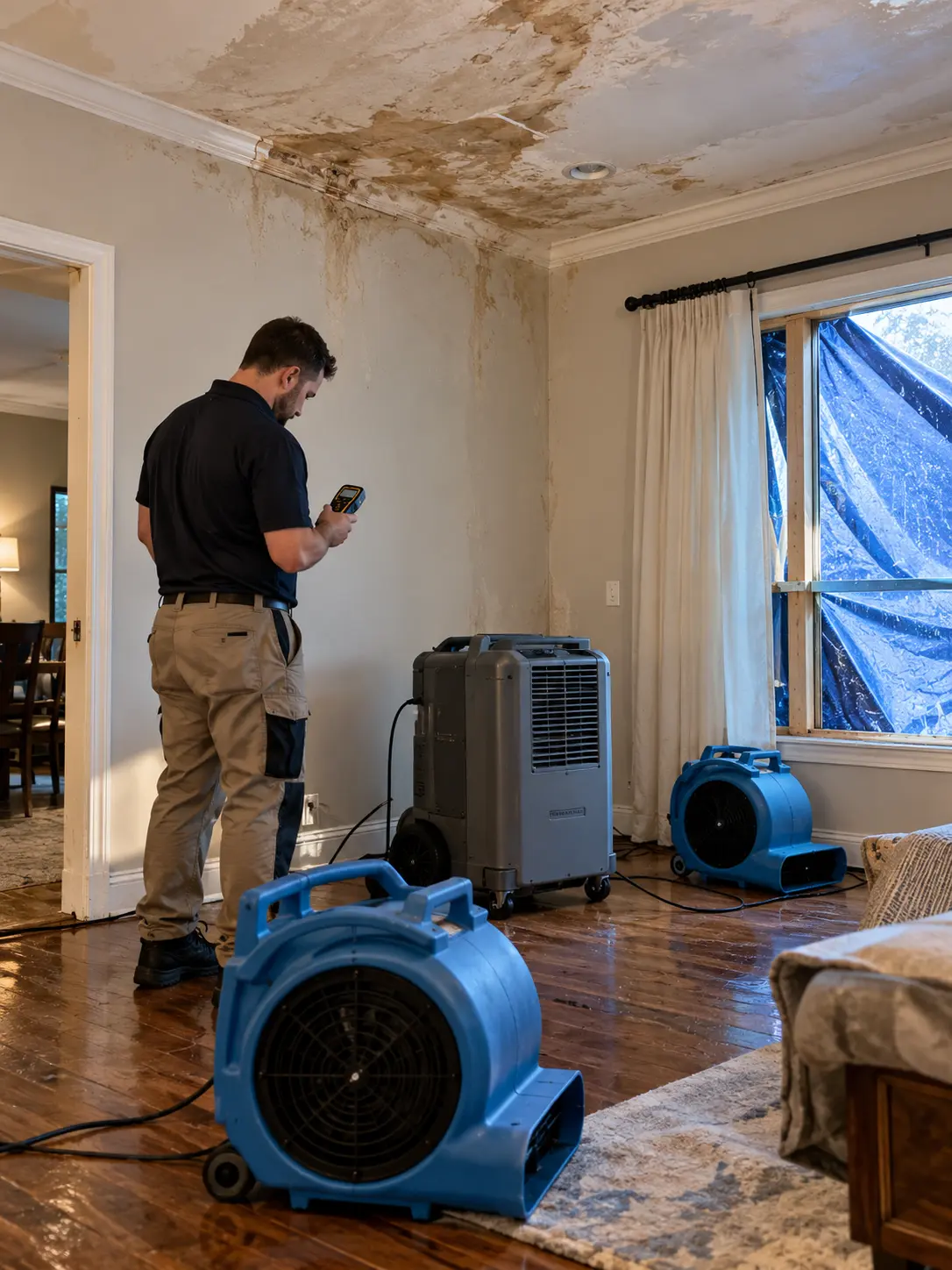
A water-damage restoration provider may address wet interior materials. However, the roof, window, door, or exterior opening that allowed rain inside may require a roofer, window specialist, or another appropriate contractor.
First, the source of additional water needs attention. Then, the restoration work can address the interior damage without new rainfall repeatedly wetting the same materials.
The scope should also distinguish between drying and reconstruction. Removing moisture from suitable materials does not automatically replace damaged drywall, flooring, roofing, or finishes.
For information about professional water-damage restoration, see the ANSI/IICRC S500 standard .
A single storm may create several repair needs. Therefore, ask which work each provider will perform before approving the scope.
| Problem | Responsibility to Clarify |
|---|---|
| Broken or missing roofing | Temporary roof protection or permanent roofing repair |
| Damaged window or door | Weather protection and exterior opening repair |
| Fallen tree or branch | Tree work and structural safety evaluation |
| Standing water indoors | Appropriate water extraction and removal |
| Wet structural materials | Material assessment, moisture control, and drying |
| Damaged interior finishes | Reconstruction after the affected area is ready for repairs |
A storm can cause both roof leaks and outdoor flooding. However, these water sources may create different contamination concerns.
Rainwater entering through damaged roofing, windows, doors, or siding may primarily create an intrusion and structural moisture problem. Conditions still require assessment.
Water that traveled across streets, yards, or drainage areas may carry sewage, debris, chemicals, and other contaminants. Consequently, cleanup decisions can be more complex.
Review EPA flood-cleanup guidance for additional information about floodwater and indoor hazards.
Storm water damage in New Orleans requires a response based on the entry point, water source, affected materials, and remaining hazards. Although the exact order varies, providers generally assess safety, control further entry, address water, and evaluate materials before repairs.
Evaluate electrical hazards, standing water, damaged ceilings, loose materials, and unsafe areas.
Determine whether the water came through roofing, windows, siding, exterior doors, or another opening.
Appropriate temporary protection or exterior repairs may be necessary before interior drying can be effective.
Where appropriate, extraction equipment removes accessible standing water from affected areas.
The provider assesses drywall, insulation, flooring, framing, ceilings, and concealed moisture.
Before reconstruction, confirm that remaining materials and water-entry conditions have received appropriate evaluation.
Describe the apparent entry point, affected rooms, and whether rainwater can still enter. Call to check independent local-provider availability.
The location of a stain does not always reveal where stormwater entered or how far it traveled. For instance, moisture may follow framing or collect inside concealed cavities before becoming visible.
Roof leaks can reach roof decking, framing, insulation, and ceilings before water appears indoors.
Water may travel along framing and collect above drywall, away from the original opening.
Wind-driven rain may move into insulation, framing, and concealed wall spaces.
Leaks around exterior openings may affect trim, drywall, nearby flooring, and wall framing.
Water reaching floor level can move beneath flooring into underlayment or subfloors.
Water may remain behind cabinets or beneath toe kicks even when visible surfaces appear dry.
Water exposure alone does not determine whether a material requires replacement. Instead, providers should consider physical damage, contamination, saturation, access, and whether appropriate drying is possible.
| Material | Important Considerations |
|---|---|
| Ceiling drywall | Sagging, saturation, damage, insulation, and safe access |
| Wall drywall | Moisture depth, concealed materials, and drying access |
| Insulation | Material type, condition, saturation, and contamination |
| Wood flooring | Subfloor moisture, movement, warping, and water source |
| Cabinets | Construction, swelling, moisture behind units, and floor exposure |
| Structural wood | Moisture, physical damage, access, and appropriate drying |
Water extraction removes accessible standing or excess water. Structural drying addresses retained moisture inside suitable building materials. Therefore, the correct approach depends on the current condition of the affected rooms.
If stormwater has pooled on floors, extraction may be an important early restoration step.
Water extraction in New Orleans →After removable water is gone, drywall, flooring, framing, and other materials may remain damp.
Structural drying in New Orleans →A storm may create both situations, but they have different primary concerns. Storm restoration focuses on weather-created building openings and related interior damage. Flood cleanup focuses on broader flooding, contamination, debris, and flood-affected materials.
| Storm Water Damage | Flood Cleanup |
|---|---|
| Rain enters through roofing, windows, or other openings. | Outdoor floodwater enters the property. |
| Weather entry and interior restoration may require separate trades. | Contamination and material cleanup become central concerns. |
| Storm damage can occur without widespread flooding. | Flooding can occur without significant roof damage. |
If outdoor flooding was the main event, review flood cleanup in New Orleans .
Severe weather may expose HVAC equipment, ductwork, insulation, and electrical components to water. However, floodwater contamination presents additional concerns.
If the system was exposed to flooding, avoid operating it until qualified personnel evaluate and appropriately address the affected components.
A surface may feel dry while the layers behind it remain wet. Accordingly, providers may assess moisture in walls, floors, framing, or other affected building materials.
Measurements can help explain whether drying is progressing and when suitable materials may be ready for the next restoration stage.
However, measurements do not replace decisions about structural damage or water contamination.
Moisture trapped in ceilings, insulation, walls, flooring, or cabinets can support mold growth if the condition remains unresolved. Consequently, moisture control and source correction are connected parts of storm recovery.
When retained moisture is the main concern, structural drying may be the more appropriate service.
Structural drying in New Orleans →If visible growth or persistent musty odors develop, the property may need a mold-specific evaluation.
Mold remediation in New Orleans →Additional guidance is available through EPA mold cleanup resources .
New drywall, paint, flooring, and trim should not conceal an unresolved water-entry problem. Before repairs, ask how the provider evaluated the exterior source and remaining moisture conditions.
The affected roof, window, door, or other opening has appropriate protection or repairs.
Removable pooled water no longer prevents further evaluation of affected materials.
The proposed scope accounts for materials requiring cleaning, removal, or replacement.
Suitable remaining materials receive assessment beyond surface appearance.
Visible mold, musty odors, and prolonged dampness are addressed appropriately.
The homeowner understands which exterior, restoration, and reconstruction work remains.
Storm restoration depends on more than the amount of rainfall. For instance, multiple entry points, wet insulation, damaged roofing, and concealed moisture can expand the work needed.
Wind-driven rain may enter through several exterior openings.
Broken roofing, windows, or siding may require separate repair work.
Direct rain intrusion and exterior flooding may require different cleanup precautions.
Moisture inside cavities and layered materials may expand the drying boundary.
Drywall, insulation, flooring, wood, and cabinetry respond differently to water.
Drying does not replace physically damaged building materials or finishes.
New Orleans homes may experience heavy rainfall, thunderstorms, tropical weather, and storm-related flooding. During one event, wind-driven rain can enter through a damaged exterior opening while outdoor water creates a separate concern near floor level.
However, general local weather conditions cannot establish the damage at a particular home. The restoration plan should follow the actual water source, affected materials, and property conditions.
Find local guidance about heavy rainfall, preparedness, and flood-related conditions.
NOLA Ready →Review local planning guidance for hurricanes, evacuation, and severe-weather risks.
Hurricane preparedness →A storm-related repair project may involve several contractors and stages. Therefore, written records can help distinguish the original damage, temporary protection, cleanup, and later repairs.
Photograph visible roof, window, siding, or debris damage when safe.
Record ceiling stains, walls, flooring, cabinets, and affected belongings.
Keep records of work intended to limit further weather entry.
Save estimates covering extraction, material work, cleaning, and drying.
Document concealed damage found after opening walls, floors, or ceilings.
Retain invoices, final photographs, and information about remaining repairs.
Storm damage explains how the water entered the property. Meanwhile, the appropriate related service depends on the water source and the restoration work required.
Removes standing or excess water from accessible affected areas.
Water extraction in New Orleans →Addresses retained moisture inside suitable building materials.
Structural drying in New Orleans →Focuses on broader flooding, affected materials, contamination, and debris.
Flood cleanup in New Orleans →Addresses contaminated wastewater from sewer or drain backups.
Sewage backup cleanup in New Orleans →Focuses on mold growth and related moisture conditions after water damage.
Mold remediation in New Orleans →Explore our broader information about residential water damage in New Orleans.
Water damage restoration in New Orleans →Ask whether the source was roofing, a window, siding, ground-level flooding, or another opening.
Confirm whether temporary protection or permanent repair is needed before interior work proceeds.
Find out whether nearby ceilings, wall cavities, insulation, or floor layers need evaluation.
Clarify whether water entered directly through an opening or traveled across outdoor surfaces.
Request an explanation of cleaning, drying, removal, and replacement decisions.
Check whether roofing, windows, tree work, or reconstruction requires another provider.
Storm water damage can involve rain entering through roofing, windows, doors, siding, or other exterior openings during severe weather.
Not always. A storm can damage roofing or windows without widespread flooding. Flood cleanup becomes more relevant when outdoor floodwater enters.
Roofing repairs and interior water restoration may be separate scopes. Confirm which provider handles each task.
Yes. Rain can enter around windows, siding, and roof connections, affecting insulation, framing, drywall, and trim.
No. Extraction mainly addresses removable excess water. If building materials remain wet without pooled water, structural drying may be more relevant.
Yes. Retained moisture can support mold growth. Therefore, addressing the source and affected materials matters.
Avoid operating flood-affected HVAC equipment until qualified personnel evaluate the system and any contamination concerns.
Homeowners can call (866) 203-7057 to describe the problem and check independent provider availability.
Need help with storm water damage in New Orleans? Describe how rain entered the home, which rooms became wet, and whether exterior damage is still allowing water inside. Then, call to check independent provider availability.
This website helps homeowners connect with independent local service providers. Availability depends on ZIP code, request type, and provider capacity. Homeowners should verify applicable licensing, insurance, qualifications, and the proposed scope before hiring.