Home About Contact Blog Call (866) 203-7057
Residential Mold & Moisture Services • New Orleans

Mold Remediation in New Orleans, LA

Mold remediation in New Orleans addresses mold growth and the moisture conditions that allow it to develop. Depending on the damage, remediation may involve containment, cleaning, removing affected materials, and correcting moisture problems. The goal is to address more than visible staining and reduce conditions that allow mold to return.

Residential Homeowners Moisture Source Evaluation Mold Containment Affected Material Cleanup
Residential Homeowner service requests
Moisture Control Address the underlying source
Containment Limit disturbance during cleanup
New Orleans City-focused coverage
Understand the Service

What Mold Remediation in New Orleans Usually Involves

Mold remediation in New Orleans begins with understanding why mold developed and which materials it affects. A provider may inspect the moisture source, evaluate contaminated materials, establish containment, and recommend appropriate cleanup. In addition, the work may require drying or repairs when water damage extends beyond visible mold growth.

When Mold Remediation May Be Needed

  • Visible mold appears on drywall, trim, cabinets, or nearby surfaces.
  • A persistent musty odor develops after a leak or flooding event.
  • Mold returns after previous cleaning.
  • Damp building materials remain behind walls or beneath flooring.
  • Staining or deterioration suggests moisture reached concealed materials.
  • Surface cleaning fails to address the underlying moisture problem.

When Water Removal or Drying May Come First

  • Significant standing water remains indoors.
  • A recently discovered plumbing leak has saturated building materials.
  • The primary problem is retained moisture rather than established mold growth.
  • Flooring, drywall, or subfloors need moisture evaluation before repairs.

Depending on the situation, begin by reviewing water extraction in New Orleans or structural drying in New Orleans .

Hidden Growth and Moisture

Finding the Moisture Source Behind Mold Growth

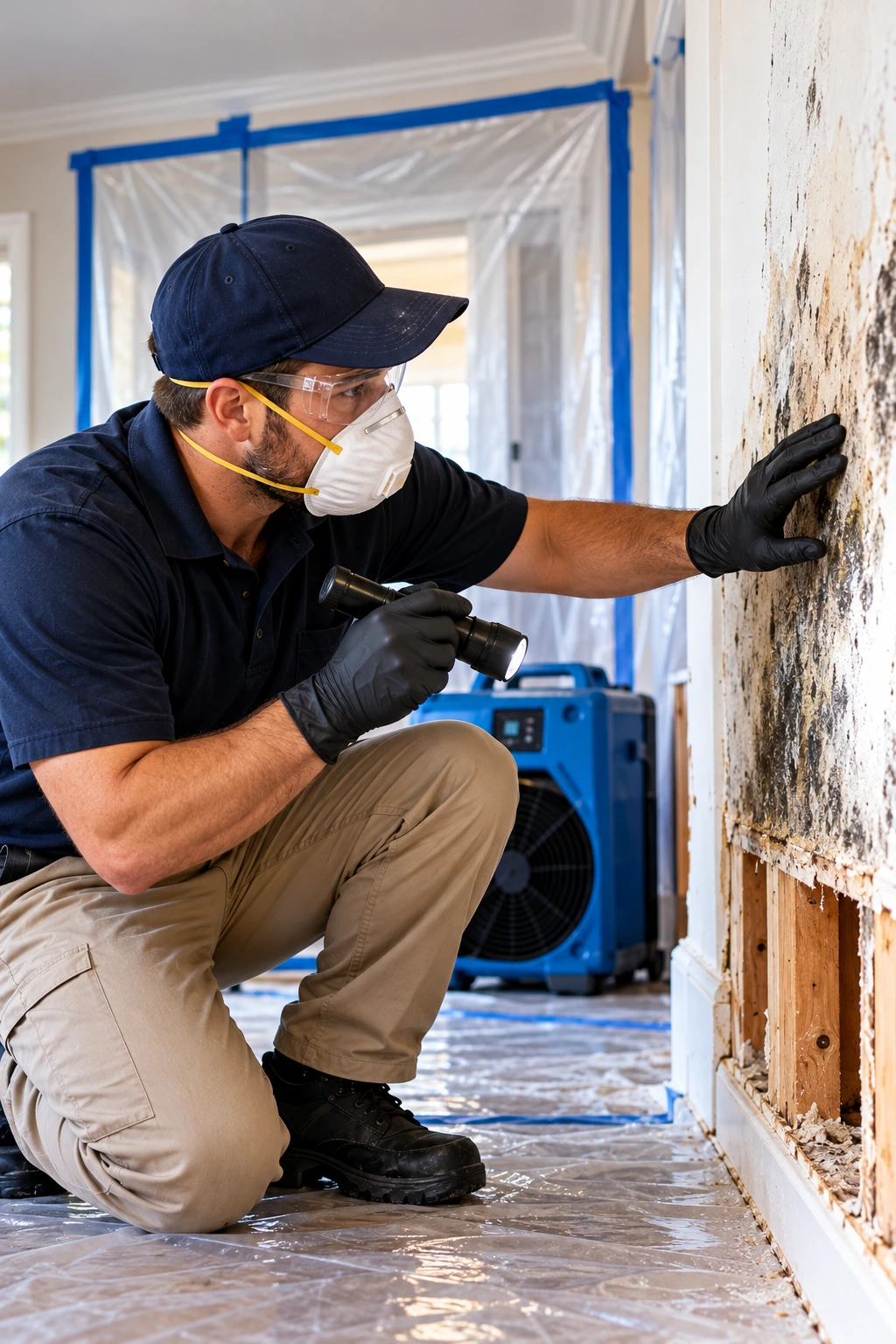
Mold develops when suitable materials remain damp. Therefore, a useful inspection looks beyond visible stains to identify where moisture originated and how far it traveled.

For example, water from a slow plumbing leak can reach drywall, cabinets, trim, and flooring before homeowners notice an obvious problem. Similarly, roof leaks may keep concealed materials wet long after rainfall ends.

In some situations, growth appears on a painted surface. However, the surrounding wall assembly may also contain damp materials. As a result, the visible patch may represent only part of the affected area.

An appropriate remediation plan considers the moisture history, material condition, and possible hidden damage before determining what work the property needs.

Why the source matters

Cleaning visible mold without correcting an ongoing leak or damp condition can allow the same problem to develop again.

Technician inspecting mold-damaged drywall inside a residential containment area
Understanding Recurring Mold

Why Does Mold Keep Coming Back After Cleaning?

Mold often returns because the conditions supporting its growth never changed. Although surface cleaning may improve the appearance of a wall, moisture can remain in surrounding materials. Consequently, recurring growth may indicate an ongoing leak, trapped moisture, poor ventilation, or contamination that extends beyond the cleaned surface.

Ongoing Moisture

Plumbing leaks, roof intrusion, condensation, or persistent dampness may continue supplying the moisture that supports growth.

Surface-Only Cleaning

Wiping a visible area may leave contamination inside porous or concealed materials.

Wet Materials Remain

Damaged drywall, insulation, or wood may continue holding moisture after the surface appears cleaner.

Repairs Begin Too Early

New paint, flooring, or wall finishes can conceal unresolved moisture problems.

Recurring mold needs more than another cleaning attempt.

First, identify the moisture source. Next, evaluate the affected materials. Finally, determine which cleanup and moisture-control steps are appropriate.

Understanding the Difference

Mold Cleanup vs. Mold Remediation

People sometimes use these terms interchangeably. However, remediation generally involves a broader assessment of moisture, contamination, and affected materials. The appropriate approach depends on the actual condition of the property rather than the appearance of a single stain.

Surface Mold Cleanup Mold Remediation
Primarily addresses visible contamination. Considers visible growth and underlying moisture conditions.
May involve cleaning a small area on an appropriate surface. May require containment, cleaning, material removal, and moisture correction.
Can focus mainly on surface appearance. Evaluates affected materials and the source of the problem.
May not address concealed contamination. Considers whether mold or moisture extends into hidden materials.
May leave underlying dampness unresolved. Incorporates moisture control into the remediation plan when needed.
Moisture control remains important.

Some affected materials require additional structural drying before repairs can proceed. Meanwhile, other materials may need removal because of contamination or damage.

Step-by-Step Overview

How Mold Remediation in New Orleans Works

Mold remediation in New Orleans should follow the conditions inside the affected home. First, the provider evaluates the moisture source and affected materials. Next, the work may involve containment, cleaning, or material removal. Finally, the provider evaluates remaining moisture and explains any restoration work that follows.

1

Identify the Moisture Source

The provider evaluates what caused the area to become damp and whether the moisture source remains active.

2

Evaluate Affected Materials

Visible growth, material damage, moisture history, and nearby building components help define the affected area.

3

Establish Containment

Appropriate barriers and work practices can help limit the spread of disturbed material outside the cleanup area.

4

Clean or Remove Materials

Depending on the condition, the provider may clean suitable surfaces and remove materials that require replacement.

5

Address Remaining Moisture

The cleanup plan should also consider damp framing, flooring, or other building materials that need attention.

6

Evaluate Completion and Repairs

After cleanup, the provider can explain the remaining work and whether the affected area is ready for restoration.

Concerned About Mold After Water Damage?

Describe the visible growth, affected rooms, moisture source, and any recurring problems. Call to check whether an independent provider is available for your residential mold-related service request.

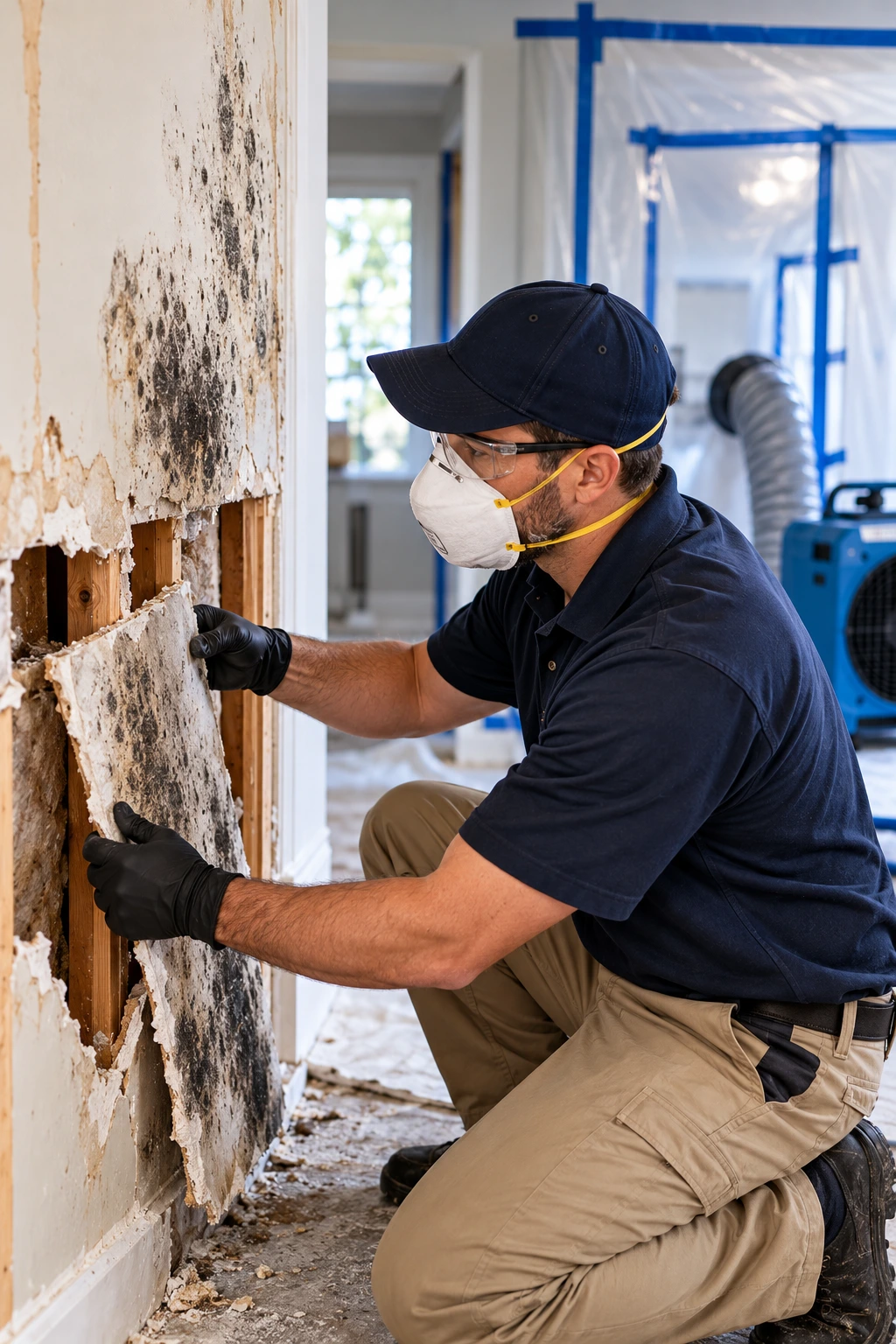
Mold remediation worker removing damaged drywall inside a plastic-contained residential work area
Containment and Material Removal

Why Some Mold-Affected Materials Need Removal

Not every mold-affected material responds to the same cleaning method. Hard, nonporous surfaces may allow appropriate cleaning. In contrast, heavily contaminated porous materials can require removal.

For example, mold may penetrate damaged drywall, insulation, or other absorbent building products. Under those conditions, surface cleaning alone may not adequately address the contamination.

Additionally, removing affected materials can reveal concealed moisture or damage. A provider can then assess the condition of surrounding framing and other building components.

Containment also plays an important role. During removal, appropriate barriers and cleanup procedures help reduce the spread of disturbed materials into nearby areas.

Ask before approving material removal.

Which materials can remain? What conditions justify removal? Does the proposed scope include cleanup and reconstruction, or only remediation?

Mold Testing and Assessment

Is Mold Testing Always Necessary?

Not every visible mold problem requires the same testing approach. In many situations, homeowners already know where water entered and can see the affected materials. However, testing or additional investigation may serve a purpose when the moisture source, contamination extent, or proposed work remains unclear.

When the Problem Is Visible

Visible mold and a known moisture source may provide enough information to begin discussing appropriate cleanup. Therefore, identifying the exact mold species is not always necessary before addressing the moisture problem.

When Additional Investigation May Help

Hidden moisture, recurring odors, uncertain contamination boundaries, or conflicting findings may warrant further evaluation. Ask what specific decision the proposed investigation would support.

Official homeowner guidance

The EPA explains that visible mold generally does not require routine sampling. Instead, homeowners should focus on correcting moisture conditions and addressing affected materials.

Review EPA guidance on mold and moisture for additional information.

Understanding the Work

What Affects the Scope of Mold Remediation?

Mold remediation in New Orleans does not follow one fixed scope for every property. The affected area, building materials, moisture source, access, and cleanup needs all influence the proposed work. Consequently, providers should base recommendations on the property's actual conditions.

Extent of Growth

Localized surface growth and contamination affecting several rooms may require very different remediation approaches.

Building Materials

Drywall, insulation, trim, cabinetry, wood, and other surfaces have different cleaning and removal needs.

Moisture Conditions

An active leak or persistent dampness may require additional repairs or drying before remediation is complete.

Containment Requirements

The size, location, and complexity of the work area affect the containment approach.

Hidden Damage

Opening affected materials may reveal further moisture or contamination beyond the original visible area.

Repairs After Cleanup

Replacing drywall, painting, repairing flooring, and rebuilding cabinets may involve separate work.

Clarify the proposed scope before hiring.

Ask whether the estimate includes containment, material removal, cleaning, disposal, moisture control, verification, and reconstruction. Independent providers determine their own pricing.

Documentation and Records

What Records Should Homeowners Keep?

Good documentation helps homeowners understand the remediation process and track changes to the property. In addition, photographs and written records may help explain why a provider recommended particular cleanup or removal procedures.

Photos of Affected Areas

When safe, document visible mold, staining, water damage, and nearby affected materials.

Moisture Source Information

Record known leaks, flooding, roof intrusion, or other events that introduced moisture.

Initial Work Scope

Keep the written proposal explaining containment, cleanup, material removal, and related work.

Additional Findings

Document any concealed damage the provider discovers after opening affected materials.

Provider Qualifications

Keep relevant business, license, insurance, agreement, and contact information.

Completion Information

Save final photographs, invoices, completion notes, and any verification records the provider supplies.

Local Housing and Moisture Conditions

Why Mold and Moisture Control Matter in New Orleans Homes

New Orleans properties encounter moisture from heavy rainfall, plumbing leaks, roofing problems, HVAC condensation, appliance failures, and indoor humidity. In addition, construction materials and building layouts vary across the city.

Older properties may contain plaster, wood flooring, raised subfloors, or renovated wall assemblies. Newer homes can have different flooring, drywall, and foundation systems. Consequently, the actual material and moisture conditions should guide remediation decisions.

A provider should not assume every historic or newer home requires the same cleanup. Instead, the work should reflect the source of moisture and affected materials at the property.

For local information, review NOLA Ready and the City's Historic District Landmarks Commission guidance .

Residential service requests focus on New Orleans city. Provider availability depends on the ZIP code, request type, and current participating-provider capacity.

For broader information about water damage and related services, visit our water damage restoration in New Orleans homepage.
Louisiana Provider Verification

What Should Homeowners Know About Mold Remediation Licensing?

Louisiana regulates qualifying mold remediation projects through its contractor licensing framework. Before hiring, homeowners should verify whether the project requires a license and confirm that the provider holds the appropriate credentials.

Verify License Requirements

Louisiana's contractor licensing board states that mold remediation projects valued at $7,500 or more require the appropriate mold remediation license. Check the current state rules before relying on a specific threshold.

Verify the Actual Provider

Ask for the independent provider's business information, relevant licensing, insurance, and written scope before approving work. Also confirm who will perform any separate reconstruction.

Official licensing information

For current licensing requirements and contractor verification, consult the Louisiana State Licensing Board for Contractors .

Find the Source of the Moisture

Water Problems That Can Lead to Mold Growth

Mold often develops after moisture reaches building materials and remains unresolved. Therefore, understanding the original water problem helps determine which additional restoration services may be appropriate.

Burst Pipe Water Damage

A broken supply pipe can saturate drywall, insulation, flooring, cabinets, and concealed materials.

Burst pipe water damage →

Appliance Leak Water Damage

Washing machines, dishwashers, refrigerators, and water heaters may create hidden dampness beneath nearby materials.

Appliance leak water damage →

Roof Leak Water Damage

Roof intrusion may affect ceilings, insulation, drywall, and wall cavities before homeowners notice the damage.

Roof leak water damage →

Storm Water Damage

Storm-related intrusion can leave damp building materials even after the visible water disappears.

Storm water damage →

Sewage Backup Cleanup

Sewage-contaminated water requires cleanup precautions that go beyond ordinary moisture control.

Sewage backup cleanup →
Before Approving the Work

Questions to Ask About a Mold Remediation Plan

A clear proposal should explain the moisture problem, affected materials, proposed cleanup methods, and the work required before repairs. In addition, homeowners should understand which services the estimate includes and which require separate approval.

What Caused the Moisture?

Ask whether the provider identified an active leak, condensation, flooding, or another source supporting mold growth.

How Far Does the Problem Extend?

Confirm whether the assessment includes nearby concealed materials and other relevant areas.

Which Materials Need Removal?

Request an explanation of which materials the provider plans to clean or remove and why.

How Will Containment Work?

Find out what precautions the cleanup plan includes to control disturbed materials during remediation.

What Happens After Cleanup?

Clarify whether drying, additional cleaning, verification, or reconstruction is necessary.

What Does the Estimate Include?

Review containment, cleaning, removal, disposal, repairs, and other proposed services before authorizing work.

Homeowner Questions

Frequently Asked Questions About Mold Remediation in New Orleans

What is mold remediation?

Mold remediation addresses mold-related contamination and the moisture conditions supporting it. Depending on the property, the process may include containment, cleaning, material removal, drying, and preparation for repairs.

Is mold remediation the same as cleaning mold?

No. Surface cleaning focuses mainly on visible growth. In contrast, remediation considers the moisture source, affected materials, contamination, and cleanup needs.

Do homeowners always need mold testing?

No. Visible growth and a known moisture problem may provide enough information to discuss cleanup. However, additional investigation can help when conditions remain uncertain.

Why does mold return after cleaning?

Mold can return when moisture remains or cleaning fails to address affected materials. Therefore, correcting the source is an important part of preventing recurrence.

Can homeowners save mold-affected drywall?

Sometimes, although heavily affected porous materials may need removal. The appropriate choice depends on contamination, moisture, and the condition of the material.

Can painting cover mold damage?

Paint may hide visible staining, but it cannot correct an ongoing moisture problem or remove contamination inside materials. Address the underlying issue first.

What if the building materials remain wet?

Retained moisture may require additional evaluation or drying. Learn more about structural drying in New Orleans and how providers assess moisture-affected materials.

How do I check mold remediation availability?

Homeowners in New Orleans can call (866) 203-7057 to describe the situation and check participating independent-provider availability.

Residential Mold Remediation

Check Mold Remediation Availability in New Orleans

Need mold remediation in New Orleans after a plumbing leak, flooding, or another moisture problem? Describe the affected area, visible growth, and any recurring mold concerns. Then, call to check independent provider availability for your residential request.

This website helps homeowners connect with independent local service providers. Availability depends on request type, ZIP code, and provider capacity. Homeowners should verify applicable licensing, insurance, qualifications, and the proposed scope of work before hiring.