1. Watch for Ceiling Hazards
Water can weaken ceiling materials. Therefore, avoid standing beneath bulging or sagging drywall.
Roof leak water damage in New Orleans occurs when rain enters through roofing and wets the attic or interior. It can affect insulation, ceilings, walls, and floors. First, address the roof opening. Then, assess hidden moisture and restore affected materials. Roof repairs and interior restoration may require different providers.
Move away from sagging ceilings and dripping electrical fixtures. Also, keep children and pets clear of damaged areas. If conditions permit, take photographs from a safe location.
Water can weaken ceiling materials. Therefore, avoid standing beneath bulging or sagging drywall.
Avoid wet switches, outlets, fixtures, and wiring. Do not touch controls from a wet area.
Wet roofing creates fall hazards. Instead, seek qualified help for inspection or protection.
When safe, photograph ceiling stains, wet belongings, and affected rooms.
Several roof conditions can allow rainwater into a home. Sometimes, a leak starts during severe weather. However, worn materials, failed flashing, and drainage problems can also contribute.
Wind or wear may loosen roofing. As a result, rain can reach materials beneath the surface.
Failed flashing near a vent, chimney, or roof connection may create an entry point.
Vents, pipes, and other penetrations need effective weather protection.
Blocked drainage may direct water toward vulnerable roof edges or connections.
Debris and strong winds can damage roofing or expose roof decking.
Over time, aging materials may lose their ability to keep rainwater outside.
Rain can enter through roof decking and reach attic insulation. From there, moisture may spread along wood framing. Eventually, water may appear as a stain or drip in a room below.
However, one visible stain does not reveal the full moisture path. Nearby insulation and ceiling cavities may also need inspection.
In addition, wet insulation can lose some of its performance. Its condition, contamination, and drying potential matter.
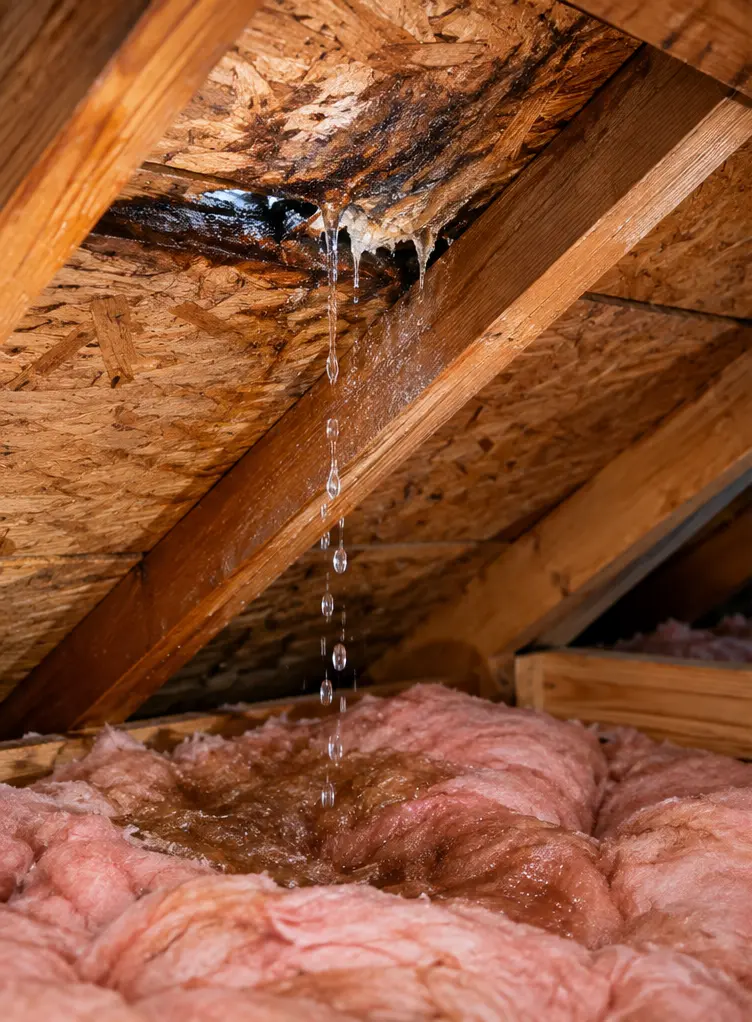
Some roof leaks drip during rainfall. Others leave only a stain after the weather clears. Therefore, inspect changes in ceilings and nearby walls. Do not assume every stain has the same cause.
Discoloration may show where moisture reached drywall or other finishes.
Damp materials can weaken paint adhesion and damage surfaces.
Heavy moisture may weaken ceiling panels and create a collapse hazard.
Moisture may collect in insulation even when rooms below look dry.
Persistent damp odors may indicate moisture that needs further investigation.
A stain that returns after rain may suggest an unresolved water source.
A roofer may repair shingles, flashing, or another entry point. Meanwhile, a water-damage provider may assess wet ceilings, insulation, framing, or flooring. Ask each provider to explain their scope.
The ANSI/IICRC S500 Standard covers professional water-damage restoration practices.
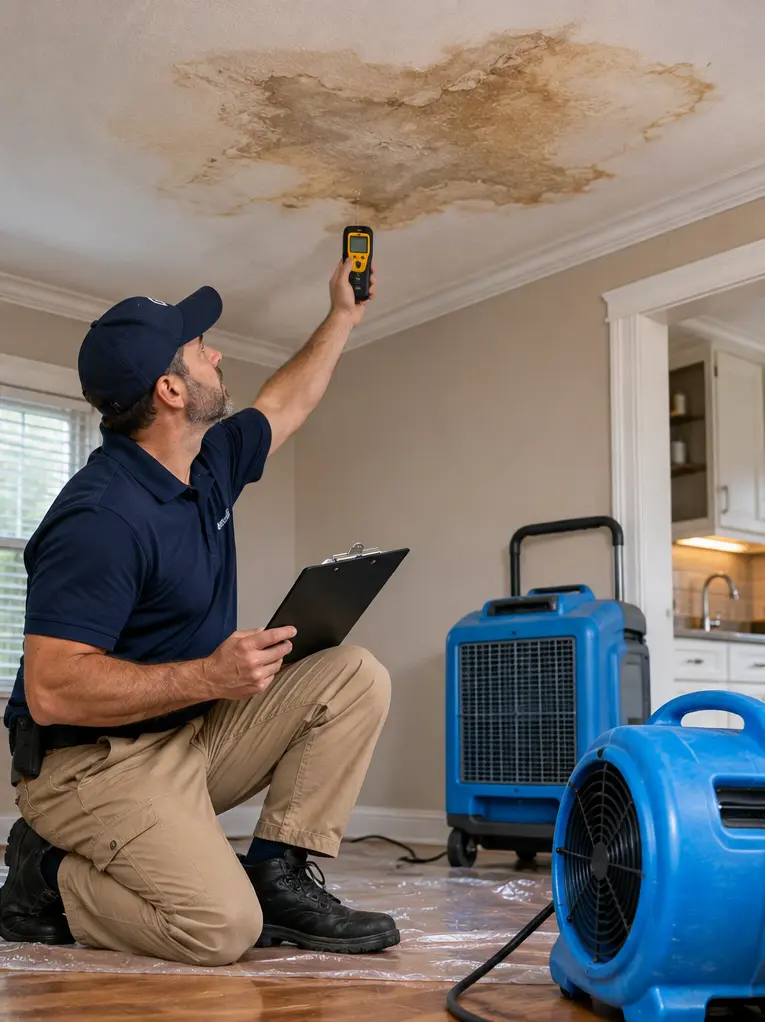
Moisture can remain in drywall, ceiling cavities, insulation, and wood after dripping stops. Therefore, surface appearance alone may not show whether the materials are dry.
A provider may use moisture readings to investigate affected materials. Then, they can decide which areas need drying or further access.
In some cases, the work may involve air movers or dehumidifiers. However, the equipment and methods depend on the property's conditions.
Water can move through several building layers before it becomes visible. As a result, the affected area may extend beyond the room where the homeowner noticed the leak.
Water may wet the underside of the roof assembly.
Moisture may follow framing away from the entry point.
Saturated insulation can hold water in concealed spaces.
Water may stain or weaken ceiling materials below.
Moisture can move into nearby wall cavities.
Active dripping may reach floors, furniture, and belongings.
The response depends on the water source, safety risks, and affected materials. First, address immediate hazards. Next, arrange roof protection. Then, assess and restore the interior.
Stay clear of unsafe ceilings, wet electrical equipment, and roof hazards.
Determine where rain likely entered the roof assembly.
Arrange suitable protection or roof repairs with an appropriate provider.
Check ceilings, insulation, framing, walls, and other relevant areas.
Address excess water. Then, dry suitable materials when conditions allow.
Review remaining moisture and damage before reconstruction begins.
A roof may leak only under certain conditions. For example, strong winds can push rain toward vulnerable openings. Heavy rain may also expose drainage or flashing problems.
However, the timing alone cannot identify the defect. A leak around an attic vent, chimney, or roof joint may look similar from below.
Repainting may conceal the stain temporarily. Instead, locate and correct the water entry point. Then, address any remaining moisture.
The material's condition matters. So do the water source, exposure time, contamination, and damage. Therefore, a provider should explain which materials can stay.
| Material | Main Concern | Useful Question |
|---|---|---|
| Ceiling drywall | Saturation, sagging, and damage | Is it safe and suitable to dry? |
| Attic insulation | Retained moisture and material condition | Can it remain or must it be removed? |
| Wood framing | Moisture and physical deterioration | What drying or repair work is appropriate? |
| Wall drywall | Hidden moisture and damaged finishes | Did water enter the wall cavity? |
| Flooring | Moisture below finished surfaces | Were underlying layers checked? |
| Paint and trim | Surface damage and hidden dampness | Has the underlying moisture been addressed? |
Yes. A roof leak can leave moisture in insulation, drywall, and wood. If damp conditions continue, mold may develop. Therefore, stop the leak and address moisture promptly.
Moisture assessment and structural drying may be appropriate. However, material condition matters.
Structural drying in New Orleans →Visible growth or persistent musty odors may require mold-specific evaluation.
Mold remediation in New Orleans →The EPA homeowner guide to mold and moisture recommends prompt drying of wet materials, ideally within 24–48 hours where feasible.
Several problems can leave water inside a home. However, each service has a distinct focus. Identifying the source helps homeowners choose the right approach.
| Situation | Primary Issue | Related Page |
|---|---|---|
| Roof leak water damage | Rain entering through the roof assembly | Current page |
| Broader storm damage | Wind-driven rain through exterior openings | Storm water damage |
| Outdoor flooding | Floodwater entering at ground level | Flood cleanup |
| Burst pipe | Water released by failed plumbing | Burst pipe water damage |
| Appliance leak | Water from a dishwasher, washer, or other appliance | Appliance leak damage |
A roof leak may leave a small stain or a large wet area. If water collects on floors, extraction may be necessary. Meanwhile, retained moisture may call for structural drying.
This service removes accessible standing or excess water. It does not repair the roof.
Water extraction in New Orleans →This service addresses retained moisture in suitable materials.
Structural drying in New Orleans →A ceiling should not receive new drywall or paint while the roof still leaks. Instead, confirm that the water source and affected materials have received attention.
Further rainwater intrusion has been addressed.
Damaged overhead materials have received assessment.
Attic materials have been evaluated for drying or removal.
Affected materials received more than a visual check.
Visible growth and persistent dampness have been evaluated.
The homeowner understands restoration and reconstruction work.
Costs depend on damaged materials, water spread, and restoration work. In addition, roof repairs may require a separate estimate.
Repeated exposure may wet more materials over time.
Wet insulation and hidden materials may expand the work.
Damaged drywall may need removal and replacement.
Leaks reaching walls or floors may require more work.
Material conditions determine the appropriate drying method.
Roof repair and interior reconstruction may have separate costs.
Heavy rain and tropical weather can test vulnerable roofing. Meanwhile, homes vary in roof design, attic access, and previous repairs. Therefore, property-specific inspection matters more than assumptions.
Older homes may contain previous repairs or layered materials. These conditions can complicate leak tracing.
New roofing does not rule out a leak. Vents, connections, and flashing still need evaluation.
For local weather preparedness, visit NOLA Ready .
Clear records can help separate roof repairs from interior restoration. When safe, capture the visible damage before work changes the area.
Photograph ceilings and nearby walls.
Record wet flooring and damaged belongings.
Keep documents for temporary and final repairs.
Retain estimates, invoices, and available moisture records.
Stay away from sagging ceilings and wet electrical fixtures. Then, seek help to control the leak safely.
Yes. Water may soak insulation before ceiling stains appear. Its condition determines the next step.
It may stop further entry. However, existing moisture may still need attention.
Yes. Retained moisture may support mold growth. Therefore, prompt moisture control matters.
No. Plumbing, HVAC, and condensation problems can also cause stains. Identify the source first.
Not necessarily. Roofing and interior restoration may require different trades.
Not always. Damage, saturation, contamination, and safety determine the appropriate action.
Call (866) 203-7057. Describe the leak and affected areas. Availability depends on provider capacity.
A roof leak may create additional restoration needs. Choose the service that matches the water source and affected materials.
Remove accessible standing water.
Water extraction →Address moisture in suitable materials.
Structural drying →Address suspected or established mold.
Mold remediation →Explore broader weather-related intrusion.
Storm water damage →Learn about outdoor floodwater cleanup.
Flood cleanup →Explore our broader New Orleans guide.
Water damage restoration →Has a roof leak damaged your ceiling, attic, or interior? Describe the water entry point and affected rooms. Then, call to check independent local provider availability.
This website helps homeowners connect with independent local service providers. It does not perform restoration work directly. Availability depends on ZIP code, request type, and provider capacity. Homeowners should verify applicable licensing, insurance, qualifications, and the proposed scope before hiring.