Water leaking through your ceiling in New Orleans? You may be wondering whether to call a plumber, roofer, electrician, HVAC technician, or water damage restoration professional.
The difficulty is that stopping the visible leak does not necessarily resolve the resulting water damage. Moisture can remain trapped behind drywall, plaster, insulation, or ceiling framing, even after dripping stops.
Choosing a professional who handles only the original leak may leave important restoration work unaddressed. On the other hand, hiring a restoration provider alone may not resolve a damaged pipe, roof, or mechanical system.
The solution is to identify the likely source, contact the appropriate qualified professional, and assess any resulting water damage. If ceiling materials in your New Orleans home have already become wet, our website can help you check availability with independent local water damage restoration providers.
This guide explains who to call first, when multiple professionals may be needed, how to verify Louisiana contractors, and what to expect from ceiling water damage restoration.
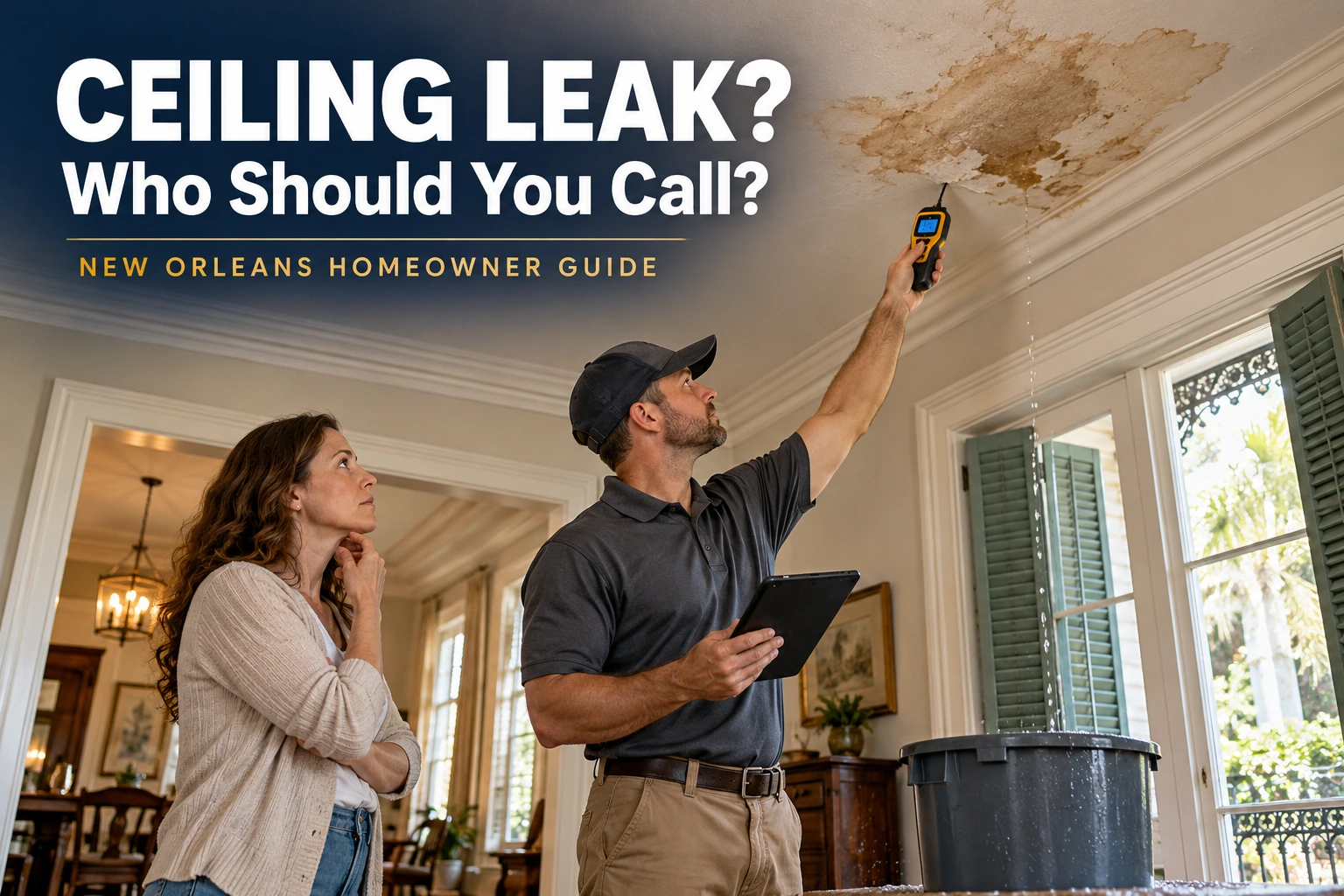
Call a plumber when interior plumbing is the suspected cause, a roofer when water enters through the roof, or an HVAC professional when the leak involves an air-conditioning or condensate system.
If water has already damaged the ceiling, insulation, or surrounding materials, a water damage restoration professional may also be needed for moisture assessment, drying, and restoration planning.
Water around ceiling lights, fans, or other electrical equipment requires special caution and may need a qualified electrician.
Not sure which professional to call? Our website helps New Orleans homeowners check availability with independent local water damage restoration providers.
Which Professional Should You Call for a Leaking Ceiling?
A water stain does not always identify the original source. Water can move along framing, pipes, roof decking, or other concealed surfaces before becoming visible inside a room.
The correct first call depends on the suspected cause, whether water is still entering, and whether safety hazards are present.
| Situation | Professional to Contact | Additional Help |
|---|---|---|
| Leak below a bathroom or kitchen | Qualified plumber for suspected water supply or drain problems. | Water damage professional if ceiling materials or cavities became wet. |
| Leak during or after rain | Qualified roofer or appropriate building-envelope specialist. | Restoration provider for interior water damage. |
| Leak near AC equipment or a condensate line | Qualified HVAC professional. | Restoration provider if ceiling or insulation remains wet. |
| Water entering a ceiling light or fan | Qualified electrician for electrical safety, plus the relevant source-repair specialist. | Water damage assessment once the area is safe. |
| Ceiling remains wet after the original leak was fixed | Water damage restoration professional. | Ceiling repair contractor after drying and material decisions. |
| Multiple leaks with an unknown cause | Appropriate leak-detection or building-diagnostic professional. | Plumbing, roofing, HVAC, or restoration specialists as findings require. |
| Leak in a rental or condominium | Property manager, landlord, or association as appropriate. | Relevant qualified trades and restoration providers according to the situation. |
For example, if a New Orleans homeowner finds water dripping from the living-room ceiling beneath an upstairs bathroom, a plumber may be needed to investigate and repair a failed connection.
However, the plumber’s work does not necessarily include drying wet insulation or restoring the damaged ceiling cavity.
Our detailed guide to upstairs bathroom leaks through downstairs ceilings covers bathroom-specific causes and repair considerations.
Who Should You Call First When Water Is Actively Leaking Through the Ceiling?
When water is actively entering a room, immediate safety concerns take priority over routine ceiling repairs.
Keep Clear of Unsafe Areas
Move people and pets away from sagging drywall, unstable plaster, falling material, or pooled water near electrical equipment. Do not puncture a bulging ceiling yourself.
Stop the Source When Safe
Stop using a suspected leaking fixture. For a pressurized plumbing leak, use a safely accessible shutoff valve. Do not enter hazardous areas to reach a valve.
Contact the Relevant Specialist
Contact a plumber, roofer, HVAC technician, or qualified electrician according to the suspected source and safety risks. Emergency services may be necessary when there is immediate danger.
Arrange Water Damage Assessment
If building materials became wet, ask a restoration professional about moisture assessment, drying, affected-material removal, and documentation.
Water reaching light fixtures, ceiling fans, wiring, or electrical panels can create a serious hazard. Do not touch affected equipment or operate breakers from a wet or unsafe location. Severely sagging ceilings may also be unstable.
Is a Ceiling Leak Always an Emergency?
Not every small stain requires the same response. An old, dry, stable stain may justify a scheduled assessment.
Active dripping, spreading damage, electrical exposure, or unstable ceiling materials can require urgent professional attention.
The size of the visible stain does not reliably show how much water entered concealed materials.
When Should You Call a Water Damage Restoration Professional?
A water damage professional becomes particularly relevant when the problem extends beyond stopping the original leak.
Ceiling materials may retain moisture even after visible dripping stops. Depending on the situation, affected materials can include drywall, plaster, insulation, wood framing, subflooring, and adjacent wall assemblies.
Situations That May Require Restoration Assessment
- Water has saturated ceiling drywall or insulation.
- Ceiling staining continues to spread after a reported repair.
- The ceiling cavity may contain trapped moisture.
- Water has affected more than one room or floor.
- The leak involved potentially contaminated water.
- Drying equipment or moisture monitoring may be necessary.
- The homeowner needs documentation of affected materials for estimates or an insurance inquiry.
What Does Professional Ceiling Water Damage Restoration Involve?
1. Assessment
A qualified provider evaluates accessible affected areas, possible moisture pathways, material conditions, and the likely extent of damage. Leak-source diagnosis may require another trade.
2. Water Removal
If standing or pooled water remains, appropriate extraction may be needed. See our New Orleans water extraction guide .
3. Material Evaluation
Wet drywall, plaster, insulation, and framing are evaluated for drying potential, structural condition, and contamination. Not every stained surface requires complete replacement.
4. Controlled Drying
Professional drying may involve appropriate equipment, environmental control, and moisture monitoring. Learn more about structural drying in New Orleans .
5. Verification
Drying decisions should be based on suitable measurements and material condition, not simply on whether the ceiling looks dry.
6. Ceiling Repair
Once the source and moisture conditions have been addressed, a qualified repair contractor may restore drywall, plaster, trim, and finishes.
How Quickly Should Wet Ceiling Materials Be Dried?
The U.S. Environmental Protection Agency advises drying water-damaged areas and items within approximately 24 to 48 hours when possible to reduce the chance of mold growth.
This is preventive guidance, not a guarantee that mold will develop at a specific time. The type of water, material condition, humidity, and extent of exposure all matter.
Source: EPA: A Brief Guide to Mold, Moisture and Your Home .
Plumber vs Roofer vs Restoration Company: Who Handles What?
When to Call a Plumber
A plumber is generally the relevant source-repair professional when the ceiling leak is associated with plumbing pipes, toilet connections, bathtub drains, shower plumbing, appliances connected to water lines, or other supply and drainage components.
A qualified plumber can investigate and repair plumbing failures within their scope. However, plumbing work alone may not address wet insulation or damaged ceiling materials.
When to Call a Roofer
A roofer may be appropriate when the leak begins during heavy rain, appears near the roofline, or is associated with suspected roofing defects.
Roof leaks can involve damaged flashing, roof penetrations, coverings, or drainage details. A building-envelope specialist may be needed when water enters through walls or windows rather than the roof.
Our New Orleans roof leak water damage page covers the resulting property damage in more detail.
When to Call an HVAC Technician
If the ceiling leak seems associated with an air-conditioning system, condensate line, drain pan, or HVAC equipment, an appropriately qualified HVAC professional may be needed.
A condensate problem can produce visible water damage without a failed plumbing fixture or roof covering.
When to Call an Electrician
A qualified electrician should evaluate relevant electrical hazards when water has reached lights, fans, wiring, switches, or other electrical equipment.
Electrical assessment does not replace repairing the water source or evaluating affected materials.
When to Call a Water Damage Restoration Professional
Contact a restoration professional when the ceiling, wall, insulation, or structural materials have been affected by water and may require extraction, drying, contamination assessment, or repair planning.
A homeowner can need restoration even when a plumber or roofer has already fixed the underlying leak.
What Homeowners Say When They Cannot Identify the Right Professional
The following discussions illustrate two common problems: uncertainty about the first professional to call and frustration after several trades inspect a leak without finding its source.
These are self-reported Reddit accounts, not verified New Orleans restoration projects.
Why Choosing a Ceiling Leak Professional Matters in New Orleans
New Orleans homes differ in age, roof type, ceiling construction, and mechanical systems. These differences can affect who should inspect a leak and which materials may need restoration.
Rain-Related Water Intrusion
New Orleans receives substantial annual rainfall. A ceiling stain appearing during rain may be associated with roofing, flashing, window or exterior-wall intrusion, or water traveling through concealed building components.
A roofing contractor may be the appropriate first source-repair professional, but interior water damage can remain after the roofing issue is corrected.
Historic Plaster Ceilings
Some older New Orleans homes contain traditional plaster-and-lath ceilings rather than modern drywall.
Historic plaster may require different evaluation and repair techniques. Its condition, attachment, moisture exposure, and preservation value should be considered before deciding whether to remove it.
The National Park Service’s Preservation Brief 21: Repairing Historic Flat Plaster offers specialized guidance on traditional plaster materials.
This is relevant to preservation-sensitive properties, although a home’s neighborhood or architectural style alone does not establish its exact ceiling construction.
Air-Conditioning and Condensate Leaks
Air-conditioning systems generate condensate that must be properly drained.
When a drain is blocked or a system component fails, water can reach nearby ceiling materials. An HVAC professional may be needed to address equipment, while a restoration provider assesses resulting damage.
Multifamily Buildings and Condominiums
In a New Orleans apartment or condominium, a ceiling leak may originate from a neighboring unit, common plumbing, a roof, or shared mechanical equipment.
Residents should notify the appropriate property manager, landlord, or association and avoid assuming responsibility for repairs involving shared systems.
Any interior water damage may still require timely assessment by a suitable professional.
New Orleans Rainfall and Water Damage: What the Numbers Tell Us
Weather conditions can help homeowners recognize patterns, but rainfall data alone cannot identify why a specific ceiling is leaking.
Sources: National Weather Service , Insurance Information Institute , and U.S. Environmental Protection Agency .
Average Monthly Rainfall in New Orleans
Code-generated chart using NOAA 1991–2020 climate normals for New Orleans International Airport. The longest bar corresponds to eight inches, and every row includes its numeric value.
June, July, and August have relatively high long-term average rainfall in this dataset. However, plumbing and HVAC-related leaks can occur regardless of the weather.
The practical lesson is to record when the leak occurs and share that information with the investigating professional, rather than assuming every ceiling stain is roof-related.
How to Verify a Water Leak Professional in Louisiana
Before hiring a contractor, New Orleans homeowners should understand the work being proposed and verify any applicable professional credentials.
Check Contractor Credentials
Use the Louisiana State Licensing Board for Contractors to search relevant contractor licensing and registration information.
Confirm Trade Qualifications
Plumbing, electrical, HVAC, structural, roofing, and restoration-related services can have different credential requirements. Ask about the license or registration applicable to the work being offered.
Request a Written Scope
Ask which work includes source repair, drying, monitoring, material removal, reconstruction, and disposal. Do not assume one contractor handles everything.
Verify Insurance and Responsibilities
Check relevant insurance documentation, qualifications, references where appropriate, and responsibility for subcontracted work.
Questions to Ask Before Agreeing to Ceiling Water Damage Work
- Which water source has been confirmed, and which is still suspected?
- Will you repair the leak source, the water damage, or both?
- Are you appropriately licensed or registered for the proposed work?
- Have affected materials been evaluated for hidden moisture?
- How will drying progress be measured and documented?
- What conditions would require removal or replacement of ceiling materials?
- Will another specialist be needed for electrical or structural concerns?
- Are demolition, disposal, cleaning, and reconstruction included?
- What is excluded from the written estimate?
- How will unforeseen conditions and changes to the scope be approved?
These questions help distinguish a complete professional plan from a proposal focused only on covering or repainting a water stain.
How Much Does It Cost to Hire Professionals for a Ceiling Leak?
Costs depend on the original leak source, professional services required, accessibility, damage severity, and whether work involves drying, reconstruction, or specialized safety repairs.
A single national ceiling-repair average cannot describe the total cost of every New Orleans ceiling leak.
| Work | Typical Scope | Why Costs Differ |
|---|---|---|
| Leak diagnosis | Investigating plumbing, roof, HVAC, or concealed pathways. | Access, investigation complexity, and testing needs. |
| Source repair | Repairing the defective pipe, roof detail, drain, or mechanical component. | Type of defect, materials, accessibility, and trade requirements. |
| Water mitigation | Removing water, evaluating affected materials, and drying. | Wet area, materials, contamination, equipment, and monitoring. |
| Ceiling reconstruction | Repairing or replacing drywall, plaster, insulation, and finishes as necessary. | Material type, structural conditions, and finish complexity. |
| Specialist work | Electrical assessment, structural repairs, or other specialty services. | Hazard level and qualifications required. |
For a detailed discussion, read our New Orleans water damage restoration cost guide .
Will Louisiana Homeowners Insurance Cover a Ceiling Leak?
Coverage depends on the cause, policy language, exclusions, applicable deductibles, and claim circumstances.
A sudden accidental plumbing event may be handled differently from gradual seepage, maintenance problems, or outside flooding.
A policy may also distinguish between repairing a failed component and paying for resulting property damage.
Consult our Louisiana water damage insurance guide for more detail.
What Should You Document?
- When and where water first appeared.
- Photographs and videos taken from a safe area.
- Weather conditions or fixture use associated with the leak.
- Which professionals inspected the property.
- What source was identified and which repairs were performed.
- Water damage assessments and moisture records, if available.
- Written estimates, invoices, and repair documentation.
Only the insurer and applicable policy terms can determine whether a particular loss is covered.
Frequently Asked Questions About Who to Call for a Ceiling Leak
Who do you call when water is leaking from the ceiling?
Contact the appropriate source-repair professional, such as a plumber, roofer, or HVAC technician. If building materials have become wet, a water damage restoration provider may be needed for assessment and drying. Electrical or structural dangers require additional qualified assistance.
Should I call a plumber or roofer for a ceiling leak?
A plumber is generally appropriate for suspected pipe, drain, or plumbing fixture leaks. A roofer is more appropriate when evidence points to roof intrusion during or after rain. Investigation may be necessary when the source is uncertain.
Can a restoration company help with a leaking ceiling?
An appropriately qualified water damage restoration provider may assess wet materials, extraction needs, drying, and restoration work. The leak source may still need to be repaired by a plumber, roofer, HVAC professional, or another specialist.
Is a ceiling leak an emergency?
An active leak may require urgent attention if water is spreading rapidly, damaging electrical equipment, or making ceiling materials unstable. Keep clear of unsafe areas and obtain appropriate professional or emergency assistance.
Who should I call if water leaks from the ceiling after rain?
A roofer or appropriate building-envelope professional may be the best initial contact when evidence indicates rain intrusion. A restoration provider may also be needed if interior ceiling materials, insulation, or framing became wet.
Who fixes water damage around a ceiling light fixture?
A qualified electrician should evaluate electrical safety, while the appropriate trade addresses the leak source. A water damage professional may assess affected building materials after the area is safe.
What if a plumber fixed the leak but the ceiling is still wet?
Repairing a pipe does not necessarily dry the ceiling cavity. A restoration provider may be needed to evaluate retained moisture, affected insulation, framing, and drying requirements before ceiling repairs begin.
Who should renters call for a ceiling leak?
Renters should notify their landlord or property manager promptly and follow applicable emergency and tenancy procedures. Avoid unsafe areas and seek emergency assistance when immediate hazards are present.
Do I need more than one contractor for a ceiling water leak?
Sometimes. A plumber may repair a pipe, a restoration provider may address water-damaged materials, and a ceiling contractor may complete reconstruction. Electrical or structural issues can require additional specialists.
How can I find a ceiling water damage professional in New Orleans?
You can check independent local restoration-provider availability through our website at (866) 203-7057 . Confirm qualifications, service scope, insurance, availability, and pricing with the participating provider.
Does homeowners insurance cover a water leak from the ceiling?
It may, depending on the cause of the damage and the policy terms. Sudden accidental plumbing losses can be treated differently from long-term seepage, neglect, or flooding from outside the home.
Coverage for repairing the failed pipe, roof component, or other source may also differ from coverage for resulting water damage. Contact your insurer for a policy-specific determination.
Who should I call for a leaking ceiling if I don’t know where the water is coming from?
If the source is unclear, a qualified leak-detection or building-diagnostic professional may help identify the likely cause. Relevant plumbing, roofing, or HVAC specialists can then address their respective systems.
If the ceiling or concealed building materials have become wet, a water damage restoration provider may also be needed. Do not assume the location of the visible stain identifies the original leak.
Can I call a water damage restoration professional before the plumber or roofer fixes the leak?
Yes. When water has already damaged the property, restoration assessment may be appropriate while source-repair arrangements are being made.
The restoration provider can explain which mitigation steps are appropriate and which work depends on the leak being stopped or the area being made safe.
However, a restoration provider does not automatically replace a qualified plumber, roofer, electrician, or HVAC technician.