Wet Flooring and Subfloors
Water may move beneath carpet, laminate, wood, tile systems, or other finished flooring and reach padding or subfloor materials that remain damp after the surface looks better.
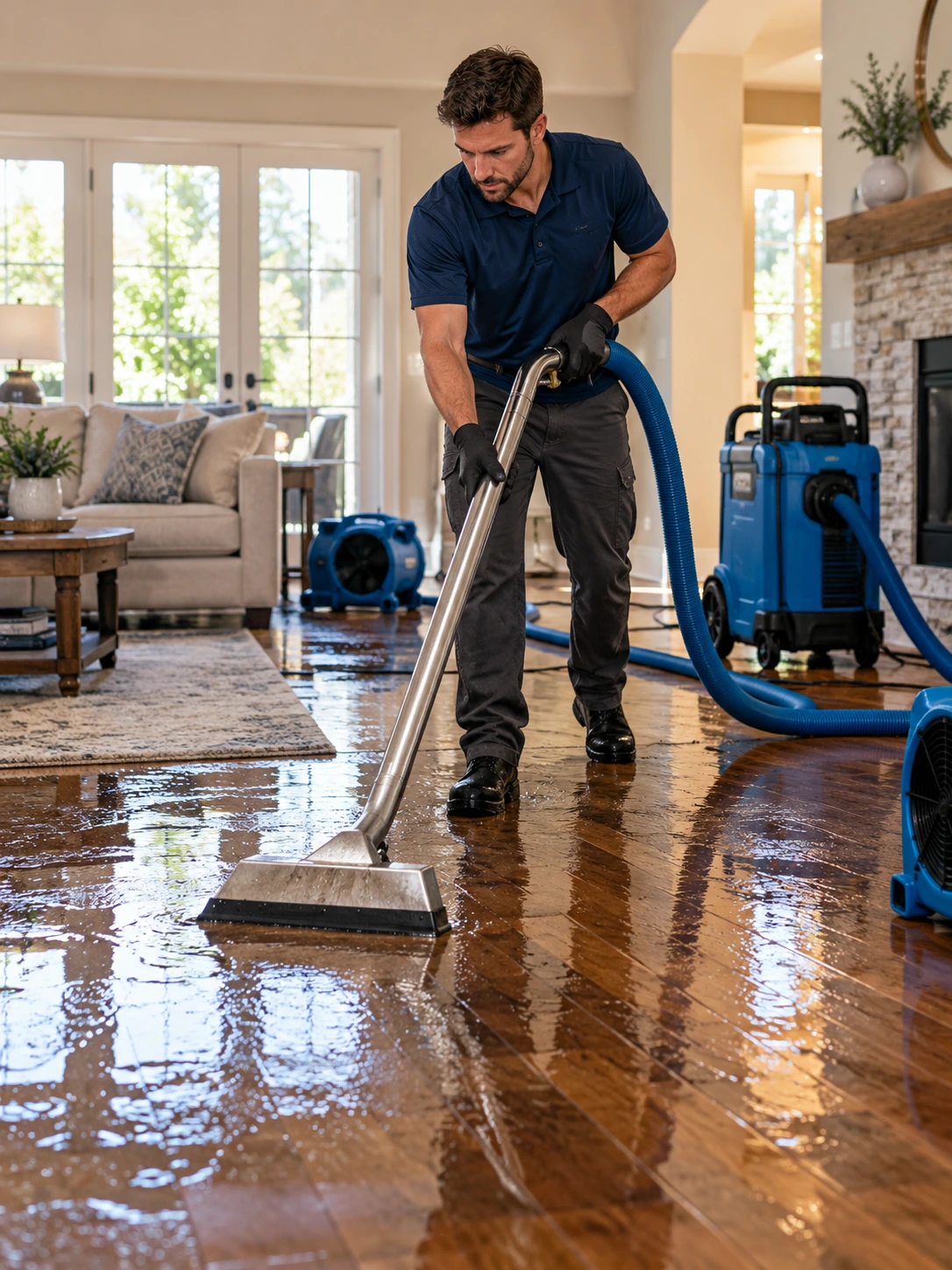
Water extraction in New Orleans removes standing or excess water from a home after leaks, plumbing failures, appliance problems, flooding, or other water intrusion. Removing the excess water is usually the first restoration step before wet flooring, drywall, cabinets, subfloors, and other affected materials can be properly dried and evaluated.
Homeowner water-removal requests
City-focused service coverage
Standing and excess indoor water
Moisture may remain after extraction
Not every water problem requires the same response. A small amount of moisture around a fixture is different from several rooms containing standing water. Water extraction is generally relevant when excess indoor water needs to be removed before affected materials can begin drying effectively.
If water is still entering the home, controlling or isolating the source can help prevent additional spread before water removal begins.
When indoor water is spreading, prioritize safety before moving belongings or trying to remove water. The right first step depends on the water source, electrical hazards, and whether the water may be contaminated.
Stay out of rooms with standing water near electrical equipment, exposed wiring, or unstable materials. Do not enter flooded areas to operate switches or breakers.
If the problem is an accessible plumbing leak, shut off the relevant water supply only from a safe, dry location. Do not enter hazardous water to reach a valve.
Water from outdoor flooding or sewage can contain contaminants. Avoid contact and keep children and pets away from affected spaces.
From a safe location, note when water was discovered, which rooms are affected, whether it is spreading, and any visible damage. Take photos only if safe.
Never touch electrical equipment or switches while standing in water. If you cannot safely access the main breaker, leave it alone and contact a qualified professional. Do not treat sewage or floodwater like a clean plumbing leak.
Visible water is often only one part of a residential water-damage problem. Water can travel beneath flooring, behind baseboards, into drywall, under cabinets, and into the subfloor before homeowners see the full extent of the affected area.
Water may move beneath carpet, laminate, wood, tile systems, or other finished flooring and reach padding or subfloor materials that remain damp after the surface looks better.
Porous wall materials can absorb moisture from the floor upward or from plumbing and roof leaks. Moisture may also remain inside wall cavities where it is not immediately visible.
Water from appliance and plumbing leaks can spread beneath cabinets or into lower cabinet materials before the leak becomes obvious.
Removing pooled water does not automatically dry the surrounding structure. Moisture checks and additional drying may still be needed for affected building materials.
Describe where the water came from, where it has spread, and whether standing water is still present. Provider availability can then be checked for the type of residential water-removal request involved.
Visible water collecting around appliances, plumbing fixtures, doorways, walls, or low points in the floor can indicate an active or recent water intrusion event.
Carpet, padding, wood flooring, laminate, and other materials can hold water even after visible pooling begins to disappear.
Damp baseboards, swollen drywall, peeling paint, or staining near the floor may mean water has spread beyond the original source.
Water can follow low areas in flooring, move through doorways, and enter adjoining spaces, making the affected area larger than expected.
Washing machines, dishwashers, refrigerators, and water heaters can release water that moves underneath nearby flooring or cabinetry.
Materials that remain damp after surface water is gone may require additional moisture evaluation and drying rather than extraction alone.
The exact response depends on the source, amount of water, affected materials, and whether contamination is involved. The process generally moves from source control and assessment to water removal, moisture evaluation, drying, and additional restoration when necessary.
Determine where water entered and whether the source is still active. Source control should be handled safely before further water spreads.
Identify standing water, visible damage, affected rooms, and possible water movement into adjoining materials.
Appropriate extraction equipment may be used to remove standing or excess water from accessible affected areas.
Flooring, padding, drywall, cabinets, and other materials may need additional moisture evaluation beyond surface inspection.
After excess water is removed, affected materials may require structural drying in New Orleans and moisture monitoring.
Some materials may require cleaning, removal, replacement, or additional restoration depending on damage and contamination.
Extraction removes excess or standing water. Structural drying addresses moisture retained in building materials after bulk water removal.
| Question | Water Extraction | Structural Drying |
|---|---|---|
| Primary purpose | Remove standing or excess water | Reduce moisture retained in materials |
| Typical affected areas | Floors, carpets, pooled water and accessible wet surfaces | Drywall, wood, subfloors, wall cavities and absorbent materials |
| Common methods | Water-removal equipment appropriate to the situation | Controlled airflow, dehumidification and moisture monitoring |
| How completion is evaluated | Excess accessible water has been removed | Affected materials meet an appropriate drying goal, assessed by the provider |
| When needed | Excess water is present | Moisture remains after water removal |
Visible water being gone does not confirm the floor or wall assembly is dry. Moisture can remain beneath flooring, in padding, within subfloors, or in wall materials. A provider can determine which checks are appropriate.
The source of the water affects how the situation should be evaluated. These related pages explain issues that may require more than ordinary extraction.
Broken or leaking supply pipes can release water into flooring, drywall, ceilings, and multiple rooms.
Learn about burst pipe water damage →Washing machines, dishwashers, refrigerators, and water heaters may release water beneath cabinets and flooring.
Appliance leak water damage →Heavy rainfall and storm-related intrusion can affect roofs, windows, doorways, and interior materials.
Storm water damage services →Outdoor flooding may introduce contaminants and affect numerous materials. Cleanup requirements depend on actual conditions.
Flood cleanup in New Orleans →Water containing sewage requires different safety and cleaning considerations from a clean-water plumbing leak.
Sewage backup cleanup →Roof leaks can create ceiling stains while moisture spreads into drywall, insulation, and wall cavities.
Roof leak water damage →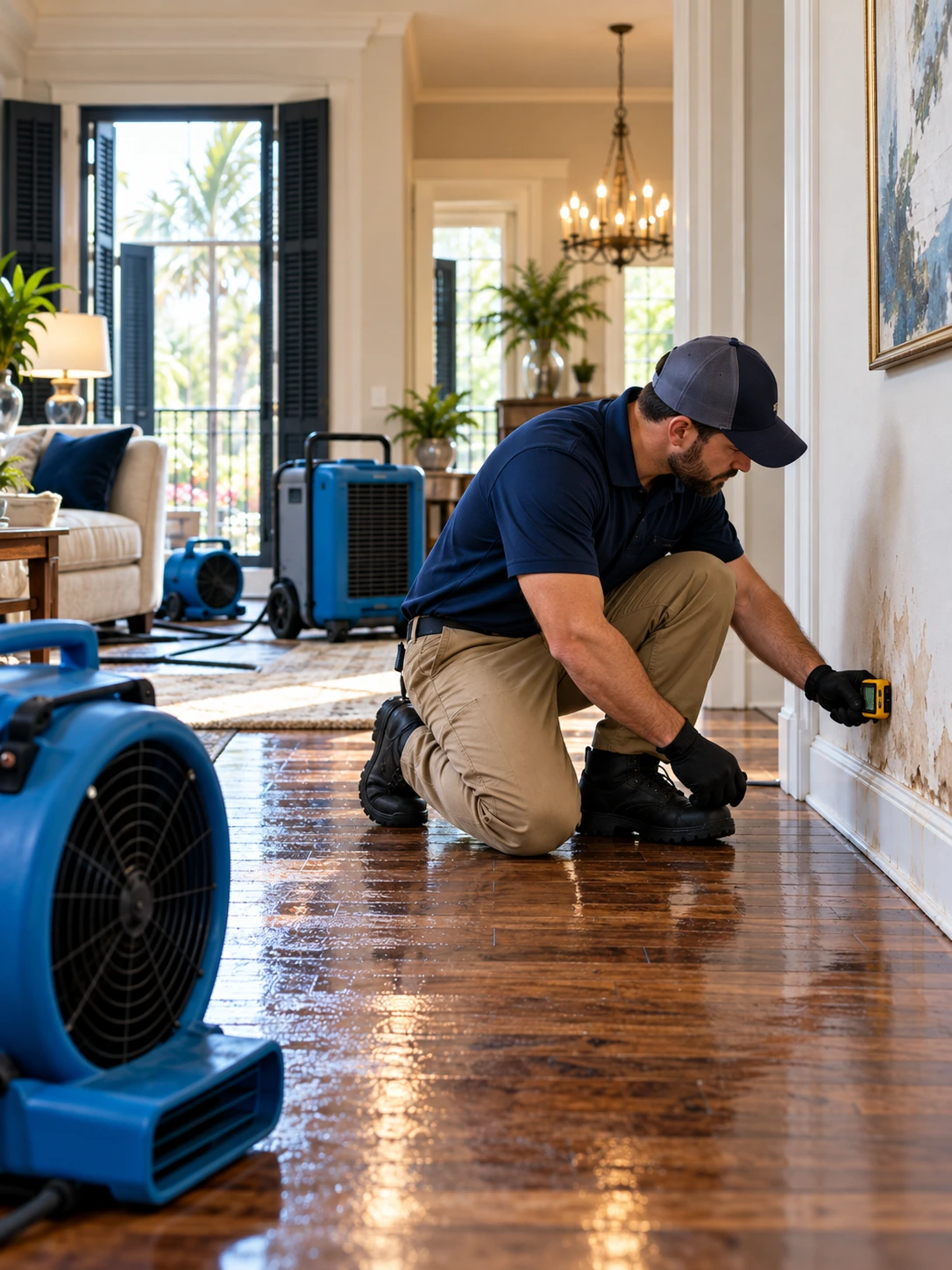
Removing standing water is only the beginning when nearby materials have absorbed moisture. Drywall, wood, carpet padding, cabinets, insulation, flooring systems, and subfloors may remain wet after visible water is gone.
CDC guidance recommends cleaning, drying, or removing wet items within approximately 24–48 hours when possible to help reduce mold growth.
Review the CDC guidance for drying wet items after a storm.
EPA guidance also emphasizes moisture control as a central part of addressing mold. Review EPA mold and moisture guidance.
If persistent moisture or visible mold is present, review our mold remediation in New Orleans information.
Water extraction does not have one fixed price for every home. Independent providers determine their own pricing based on the actual conditions, required work, and additional services involved.
More standing water, greater depth, or water affecting multiple rooms can change the extraction scope.
Carpet, padding, hardwood, laminate, subfloors, cabinets, and drywall may need different evaluation or treatment.
Clean plumbing water, exterior floodwater, and sewage can require different precautions and cleanup procedures.
Water below flooring or cabinets may require additional assessment or access to affected materials.
Extraction and structural drying may be separately defined parts of a proposed job.
Some conditions may require removal of damaged materials or additional cleanup after bulk water is extracted.
Water extraction and structural drying may be separate parts of the scope. Ask the provider what the estimate includes, which services are excluded, and whether additional work may be necessary. Independent providers set their own pricing.
For published pricing benchmarks, cost charts, and tips on comparing cleanup and repair estimates, see our New Orleans water damage restoration cost guide . The published figures are national references, not guaranteed local prices.
Before agreeing to work, use these questions to better understand the proposed extraction process and the additional services that may be required.
Ask whether the provider identified only visible water or also checked nearby areas where it may have spread.
Discuss possible movement into subfloors, padding, wall cavities, and concealed materials.
Ask what evaluation is planned after standing water is removed.
Clarify whether the proposal covers water removal only or additional drying and monitoring.
Ask whether affected materials may need cleaning, removal, or replacement instead of being dried in place.
Confirm whether the situation involves possible contamination and what precautions are proposed.
Ask how the provider defines the end of extraction and what happens if retained moisture remains.
When it is safe, documenting the situation can help homeowners describe the loss accurately, understand provider recommendations, and keep track of work performed.
Record the apparent source and when the water problem was discovered.
List rooms, standing-water locations, and visible damage to materials.
Document safe-to-access affected areas before conditions change.
Keep the written scope, estimate, invoices, and relevant moisture documentation if supplied.
Coverage can depend on the source of the water, exclusions, limits, and facts of the loss. Review your policy and follow your insurer's reporting and documentation instructions. This page does not guarantee insurance coverage.
New Orleans homes may experience indoor water from plumbing failures, appliance leaks, roof-related intrusion, storms, and flooding. The source and path of water matter more than simply identifying a neighborhood or assuming all wet materials require the same treatment.
During heavy rainfall or street flooding, outdoor conditions may change while indoor materials remain wet. Water extraction and moisture evaluation should be based on the actual areas and materials affected inside the property.
Homeowners can consult NOLA Ready for emergency preparedness resources, localized weather information, reported flooding resources, and links to Sewerage & Water Board information when available.
These resources describe broader conditions. They do not replace an evaluation of moisture and damage inside the home.
Residential service requests are limited to New Orleans city. Provider availability varies by ZIP code, request type, and current capacity.
For a broader explanation of cleanup, mitigation, and related services, visit our water damage restoration in New Orleans homepage.
Water extraction is the removal of standing or excess water from a property. It may be followed by moisture evaluation, structural drying, cleaning, and other restoration steps based on actual conditions.
No. Extraction focuses on removing excess water. Water damage restoration may also include drying, cleanup, material removal, and repairs.
Yes. Water can move beneath finished floors into padding, subfloors, and other materials. A surface that looks dry may not confirm the materials below are dry.
Water intrusion should be addressed promptly when it is safe. The source, contamination concerns, electrical hazards, and affected materials influence what action is appropriate.
The duration depends on the amount and depth of water, number of rooms, accessibility, and materials involved. Removing excess water may take less time than drying affected building materials.
Fans and dehumidifiers support drying conditions, but they do not replace the removal of significant standing water. Avoid using fans across visible mold or suspected contaminated materials without professional guidance.
Sewage-contaminated water can pose additional health risks and requires different cleanup considerations. Review our sewage backup cleanup information.
Possibly. If moisture remains in drywall, flooring, subfloors, or other materials, additional drying and monitoring may be necessary.
Requests are focused on residential properties in New Orleans city. Actual availability depends on the request, ZIP code, and participating provider capacity.
Call to check whether an independent local provider is available for your residential water-removal request. Explain the water source, affected areas, and whether standing water remains.
This site helps homeowners connect with independent local providers. Availability depends on the request and provider capacity. Homeowners should verify provider qualifications, licensing where applicable, insurance, and proposed work before hiring.