New Orleans Homeowner Guide | Updated October 2026
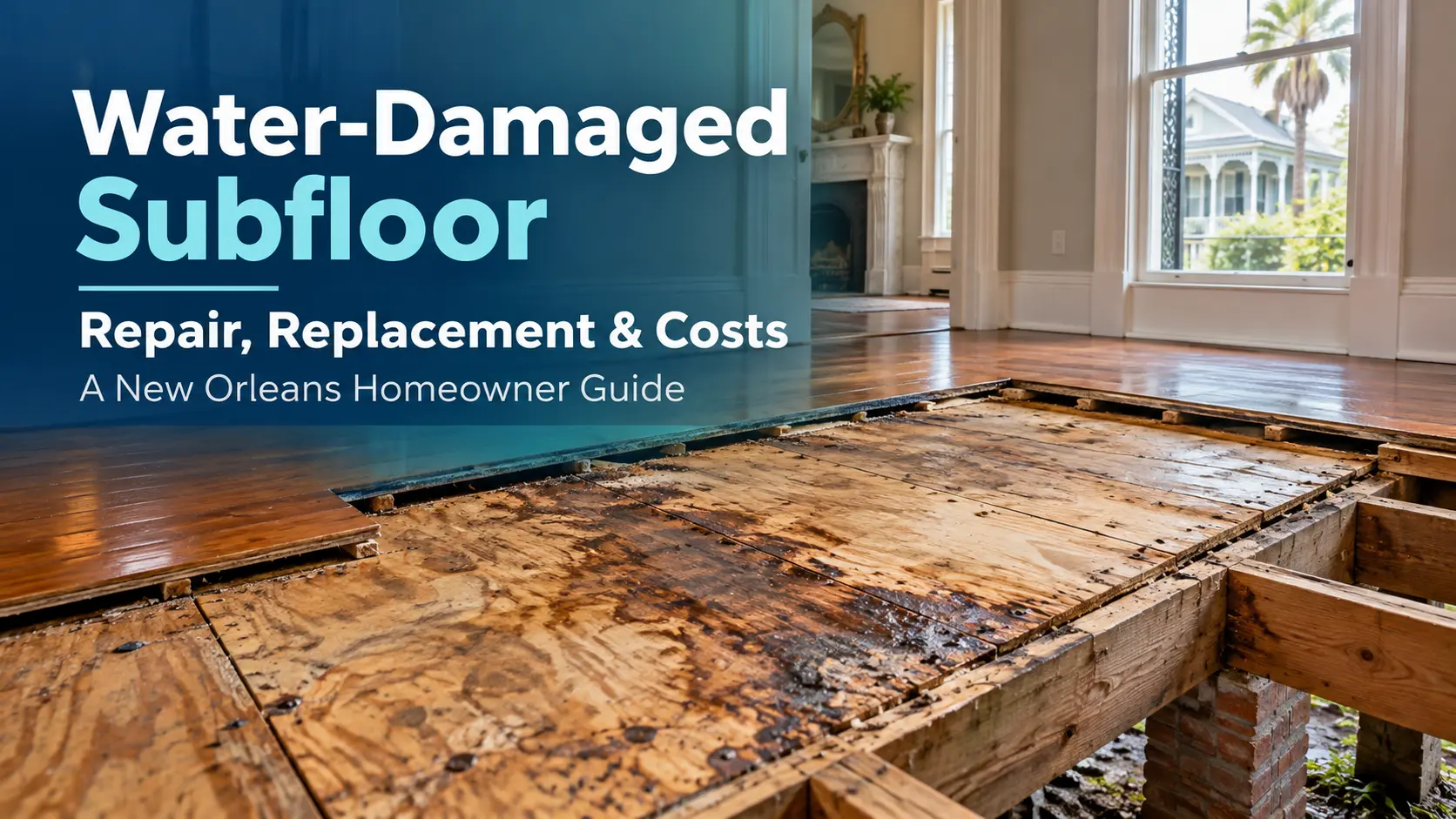
A soft bathroom floor, swollen plywood, or damp wood beneath a raised house creates two important questions: Can a water-damaged subfloor be repaired, and how much will it cost?
For New Orleans homeowners, the answer depends on the water source, actual floor construction, affected materials, and whether structural framing has been damaged. Historic raised houses, renovated properties, and slab-foundation homes can have very different repair requirements.
This guide uses published national cost benchmarks, Louisiana building-science research, and material-specific technical guidance. Prices are not verified New Orleans contractor quotes.
How Much Does Water-Damaged Subfloor Repair Cost in 2026?
Water-damaged subfloor repair costs depend on the extent of damage, the materials involved, accessibility, and whether the estimate covers only subfloor work or a complete restoration project.
For a New Orleans property, replacing a small section of plywood beneath a bathroom floor is not equivalent to repairing damaged joists beneath a raised house. Similarly, a contractor replacing flooring after a clean-water leak may perform different work from one addressing contaminated floodwater.
National Room Example
$900 to $3,000 Published subfloor replacement estimate for an approximately 300-square-foot room. Source: Angi.Professional Repair Scope
$26.13 to $44.95 Per square foot for a defined professional repair scope. Source: Homewyse, May 2026.Louisiana Research
8 New Orleans Homes Included in a 12-house southern Louisiana raised-floor moisture study. Source: U.S. Forest Service.Why Published Subfloor Repair Prices Differ
A common problem with online subfloor pricing is comparing estimates that describe different work.
A material-only price may exclude demolition, labor, moisture monitoring, drying equipment, finished flooring, structural reinforcement, and disposal. A complete contractor quote may include several of these services.
Angi’s published example for a 300-square-foot room.
This is a total project benchmark, not a per-square-foot professional water mitigation quote.
View Angi’s pricing guideHomewyse’s May 2026 benchmark for a defined repair scope.
Different inclusions and exclusions apply. Complete reconstruction may involve additional work.
View Homewyse’s repair scope| Cost Component | What It May Include | Potential Additional Charges |
|---|---|---|
| Subfloor materials | Plywood or OSB panels and fasteners | Labor, demolition and disposal |
| Subfloor replacement | Removing damaged panels and installing replacements | Finished flooring, plumbing repairs and drying |
| Structural repair | Joist reinforcement and specified framing repairs | Engineering, permits and additional framing work |
| Water mitigation | Extraction, drying equipment and moisture monitoring | Reconstruction and leak-source repair |
| Bathroom restoration | Potential fixture removal, flooring and wall repairs | Work excluded from the written scope |
New Orleans homeowners comparing contractor estimates should request an itemized breakdown showing which materials will be removed, which components can be dried, and whether rebuilding is included.
For broader extraction and drying costs, see our New Orleans water damage restoration cost guide.
Can a Water-Damaged Subfloor Be Repaired or Must It Be Replaced?
A wet subfloor does not automatically require replacement. Some plywood and OSB panels may remain usable after appropriate drying if they retain structural integrity and have not been exposed to disqualifying contamination.
According to APA, The Engineered Wood Association, moisture exposure does not necessarily mean an engineered wood structural panel has permanently failed.
However, prolonged exposure, separation of plywood layers, serious swelling, deterioration, or loss of structural performance can change the recommendation.
| Observed Condition | Possible Approach | Reason |
|---|---|---|
| Wet but structurally sound plywood | Controlled drying and reassessment | Moisture alone does not prove permanent structural failure |
| Minor OSB edge swelling | Evaluate flatness, fastening, strength, and floor-finish requirements | Some surface changes may not require replacement |
| Separating plywood layers | Consider localized or wider replacement | Delamination may compromise panel performance |
| Soft, crumbling, or decayed panels | Professional replacement assessment | Physical deterioration may affect structural safety |
| Sagging or deteriorated floor joists | Qualified structural evaluation | Supporting framing may require reinforcement or replacement |
| Contaminated floodwater or sewage exposure | Contamination-focused professional assessment | Drying alone may not adequately address contamination |
Repair or Replace: A Practical Decision Guide
When standing water is present, the first professional service may involve water extraction in New Orleans.
Where structurally sound building materials retain moisture, structural drying may be part of the solution.
Which Subfloor Materials Are Used in New Orleans Houses?
New Orleans has varied housing construction, including historic shotgun houses, Creole cottages, raised-basement properties, bungalows, renovated historic buildings, and newer slab-foundation homes.
These house styles may have different foundations and floor assemblies. A home’s neighborhood, architectural appearance, or estimated age does not reliably establish which material is underneath its finished flooring.
Solid Wood Floorboards
Some older New Orleans homes contain solid wood flooring, including documented historic heart-pine and cypress materials. In certain older assemblies, original boards may perform structural functions without a separate modern plywood or OSB panel beneath them.
Historic wood flooring may justify preservation-sensitive evaluation rather than immediate removal.
Plywood Subfloors
Plywood is commonly used as a structural subfloor in wood-framed construction. Its cross-laminated layers provide strength and dimensional stability, but prolonged water exposure can cause swelling, warping, or delamination.
The panel’s structural condition after drying is important.
Oriented Strand Board (OSB)
OSB is another engineered structural panel used in residential floors. Moisture exposure may produce edge swelling, raised strands, or dimensional changes.
An assessment should consider the actual panel condition, fastening, and suitability for the proposed finished floor.
Wood Joists and Support Beams
Raised houses often use wooden joists and beams to support flooring. These components can be affected by plumbing leaks, flooding, crawlspace humidity, or prolonged moisture.
Persistent decay, sagging, or compromised connections may require structural assessment.
Underfloor Insulation
Fiberglass batts, rigid foam, and spray foam may be present in raised-floor assemblies.
Wet or poorly configured insulation can complicate moisture management and conceal affected wood. The floor assembly must be considered as a whole.
Concrete Slabs and Floor Finishes
Many New Orleans-area houses have concrete slabs beneath tile, carpet, vinyl, laminate, or other finishes.
A concrete slab is not a wooden subfloor. Water may damage flooring, underlayment, adhesives, and adjacent walls without requiring slab replacement.
Why Subfloor Repairs Differ Across New Orleans Homes
Water-damaged subfloor repair is not identical across New Orleans neighborhoods or house types. The actual foundation, framing, floor layers, previous alterations, and source of moisture determine which components need attention.
Historic Shotgun Houses and Raised Cottages
Many traditional New Orleans houses were constructed with elevated wood floor systems over piers or other supports. Some retain original wood flooring, while others have been substantially renovated.
A property in the Marigny, Bywater, Irish Channel, or another historic area may contain an older floor assembly, but the address or building style alone cannot establish its exact construction.
Repair considerations may include original wood flooring, joist condition, underfloor moisture, prior repairs, and changes introduced during remodeling.
Raised-Basement and Elevated Homes
Some houses in areas such as Mid-City, Broadmoor, and Carrollton have elevated primary living areas or lower levels with different floor systems.
Water entering a lower space does not automatically mean the elevated living-floor subfloor has been damaged. Conversely, a leak originating above the primary floor may affect the wood assembly without flooding the space beneath the building.
Newer and Renovated Homes
Newer or heavily renovated New Orleans homes may contain plywood or OSB panels, engineered flooring, updated insulation, and modern waterproofing materials.
Multiple flooring layers can complicate moisture detection. Finished flooring may appear dry even when underlayment or structural panels retain moisture.
Slab-Foundation Homes
For slab-on-grade houses, the investigation should focus on finished flooring, adhesives, underlayment, wall-floor connections, and slab moisture.
Repair recommendations assuming wooden joists and plywood panels may not apply.
Example Raised Wood Floor Assembly
Code-generated educational diagram showing one possible raised-floor assembly found in New Orleans residential construction.
Outdoor humidity, water intrusion, condensation, or crawlspace moisture may affect some raised-floor assemblies.
The City of New Orleans Historic District Landmarks Commission provides guidance on historic building types and preservation considerations.
What Louisiana Research Reveals About Moisture Beneath Raised Floors
One useful source for New Orleans homeowners is a U.S. Forest Service study examining moisture behavior in insulated raised wood floors in southern Louisiana.
The research monitored 12 houses, including eight in New Orleans, and investigated moisture conditions associated with flooring materials, insulation arrangements, indoor temperatures, and seasonal humidity.
Total Study Houses
12 Raised-floor houses in southern Louisiana.New Orleans Houses
8 Houses included from New Orleans.Monitoring Period
12 Months Research tracking seasonal moisture behavior.Researchers observed that some floor configurations experienced higher moisture levels under conditions involving humid outdoor air, air conditioning, insulation type, and relatively vapor-resistant floor finishes.
This matters because some raised-floor moisture problems in New Orleans occur without obvious indoor flooding or an active plumbing failure.
How Can Moisture Accumulate Beneath a House?
During humid Louisiana weather, outdoor air beneath a raised house may contain substantial moisture. When floor assemblies are cooled by air conditioning, temperature and vapor conditions can contribute to moisture accumulation in some configurations.
Floor finishes that restrict drying and certain insulation systems may influence how moisture moves through an assembly.
These conditions differ from a sudden plumbing leak or contaminated flooding event. They require investigation of the actual moisture source rather than assuming every damp subfloor needs the same treatment.
Real Homeowner Experience: When a Subfloor Repair Quote Reaches $10,000
Subfloor repair estimates can become confusing when a contractor proposes replacing more than the visibly damaged area. A homeowner discussion on Reddit illustrates this concern.

Homeowner Questions Repair Scope
A Bathroom Repair Quote Much Larger Than Expected
A homeowner described receiving an approximately $10,000 contractor estimate involving flooring replacement, bathtub removal, work around a dividing wall, and replacement flooring.
The homeowner questioned whether such extensive repair work was necessary for the visible damage and sought other opinions.
Community responses reflected differing views about labor, demolition, concealed damage, and the proposed repair scope.
Why this matters: A quote covering bathroom demolition and reconstruction cannot be compared directly with the price of a small plywood subfloor patch.
Read the original Reddit discussion .
This is a self-reported homeowner experience. The property is not verified as being in New Orleans. The quote was not independently validated and is not evidence of typical Louisiana repair costs.
What New Orleans Homeowners Can Learn From This Example
Before accepting a large repair estimate, ask whether the scope includes only subfloor replacement or additional work involving flooring, plumbing, fixtures, framing, walls, drying, and reconstruction.
Two estimates with similar totals may describe completely different amounts of work.
What Should a New Orleans Subfloor Repair Estimate Include?
A useful subfloor repair estimate should explain the affected areas, material conditions, proposed work, exclusions, and situations that could change the final cost.
- Which rooms and areas have confirmed water damage?
- How was the affected square footage measured?
- Is the subfloor plywood, OSB, solid wood boards, or another material?
- Can any structurally sound material be dried and retained?
- Does the quote include moisture mapping and follow-up measurements?
- Are floor joists, beams, or connections damaged?
- Does the work include removing and reinstalling finished flooring?
- Are bathroom fixtures, appliances, or baseboards included?
- Is the original leak-source repair included?
- Are demolition, disposal, permits, and reconstruction included?
- What hidden conditions could require a written change order?
- Who is responsible for structural assessment where necessary?
- What qualifications, insurance, and warranties does the contractor provide?
Different Water-Damaged Subfloor Repair Situations
Small Bathroom Leak
A localized bathroom leak may affect flooring around a toilet or bathtub. The scope depends on whether water reached the subfloor, whether surrounding panels remain sound, and whether fixtures must be moved.
Raised-House Moisture
A New Orleans raised house may have moisture beneath its floor due to a leak, exterior water entry, or chronic humidity conditions. Repairs may involve insulation, panels, or framing, depending on findings.
Storm or Flood Damage
Floodwater exposure may require contamination-related precautions, cleaning, removal of unsuitable porous materials, drying, and reconstruction.
Historic Wood Flooring
Original wood flooring may require specialized assessment to determine whether material can be retained, repaired, or appropriately matched during replacement.
When damage originates from exterior flooding, review our New Orleans flood cleanup information.
For ongoing moisture in potentially sound building materials, our structural drying page explains the importance of moisture assessment and documented drying progress.
Does Louisiana Homeowners Insurance Cover Water-Damaged Subfloors?
Coverage depends on the cause of damage and the individual insurance policy.
Sudden accidental plumbing damage may be treated differently from ongoing moisture, gradual deterioration, or flooding from outside the property.
Standard homeowners insurance generally does not cover external flooding. Separate flood insurance may be necessary.
The Louisiana Department of Insurance provides guidance on homeowners policies, covered losses, exclusions, and claims.
Before filing a claim, document damage from safe areas, identify the suspected water source where possible, preserve relevant records, and obtain written assessments or estimates.
For detailed Louisiana coverage information, see our water damage insurance guide.
No coverage or reimbursement can be guaranteed based solely on the appearance of damaged flooring.
Do New Orleans Subfloor Repairs Require Permits?
Permit requirements depend on the work performed.
Minor flooring repairs may be treated differently from structural changes involving joists, beams, foundations, or other load-bearing elements.
For structural changes, homeowners should confirm applicable requirements with the City of New Orleans permitting department.
Historic-property considerations may also be relevant when repairs affect regulated parts of a historic building.
Floodwater, Mold, and Safety Considerations
Water exposure should be addressed promptly. The U.S. Environmental Protection Agency recommends drying wet materials and areas within approximately 24 to 48 hours where feasible to reduce mold growth.
However, this is a general mold-prevention recommendation. It does not mean every structurally sound subfloor must automatically be replaced after that period.
See the EPA flooded-home safety guidance for additional precautions.
Frequently Asked Questions About Water-Damaged Subfloors
Can a water-damaged subfloor be repaired?
Yes, in some cases. Localized damage may be repairable when surrounding materials remain structurally sound. Extensive deterioration, contamination, or damaged framing may require more substantial replacement or structural work.
Is a subfloor ruined if it gets wet?
Not necessarily. Some plywood and OSB panels can be dried and retained after assessment. The decision depends on material condition, structural integrity, moisture exposure, contamination, and drying results.
How long does a water-damaged subfloor take to dry?
There is no universal drying time. Thickness, material type, air movement, humidity, exposure duration, trapped moisture, and floor coverings influence drying. Progress should be evaluated using appropriate moisture measurements rather than a fixed number of days.
Does wet OSB always need replacement?
No. Minor surface swelling does not necessarily mean a panel has lost its structural performance. However, severe swelling, deterioration, instability, or other damage may make replacement necessary.
How much does bathroom subfloor repair cost?
The price depends on whether the work involves a small localized patch, removal of tile and fixtures, moisture mitigation, structural repairs, or complete bathroom reconstruction. Published national estimates provide context but cannot replace an itemized local quote.
Can water damage a subfloor without visible marks on the finished floor?
Yes. Moisture may accumulate beneath flooring, especially where water enters at wall-floor intersections, around plumbing, or from below a raised floor. A dry-looking surface does not always confirm that the underlying assembly is dry.
Why are raised New Orleans houses vulnerable to underfloor moisture?
Some raised-floor assemblies are exposed to humid air beneath cooled living spaces. Depending on insulation, flooring materials, and moisture conditions, condensation or vapor movement can contribute to elevated wood moisture. The actual cause requires property-specific investigation.
Does homeowners insurance pay for rotten subfloor replacement?
Not automatically. Coverage depends on the policy and the cause of damage. Gradual deterioration may be treated differently from a sudden covered water event. Review policy terms and contact the insurer for a claim-specific determination.
Should a homeowner replace the entire subfloor after a small leak?
Not always. Removal should be based on the extent of affected and unsound material, contamination, surrounding structural conditions, and the practical requirements of the repair. A qualified assessment can help establish appropriate repair boundaries.
Can an original wooden floor in a historic New Orleans house be saved?
Sometimes. Preservation may be possible if the wood is structurally sound and suitable for cleaning and controlled drying. Decay, severe deformation, contamination, or concealed damage may limit recovery options.
For New Orleans Homeowners
Need Help With a Water-Damaged Subfloor?
Whether the damage involves a bathroom leak, wet plywood, moisture beneath a raised home, or flooding, the next step is understanding which materials are affected and what repairs may actually be necessary.
Call to check whether an independent local provider is available for your residential water damage situation.
Call (866) 203-7057This website provides homeowner information and may connect callers with independent providers when available. It does not directly perform restoration work. Providers determine service availability, pricing, qualifications, inspection findings, and repair scope. No response time, restoration outcome, or insurance coverage is guaranteed.